


Hi there! How can we help you today?
Blood Clot Treatment With McNamara Catheter (CDT)
Catheter-directed thrombolysis; targeted and advanced treatment of vascular clots
What is a CDT catheter? Catheter-based treatment of blood clots in DVT and why it matters
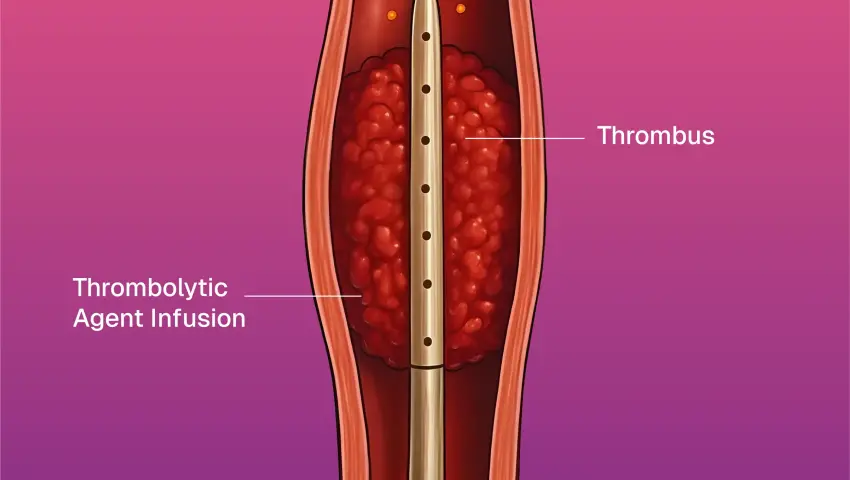
CDT catheter, or Catheter-Directed Thrombolysis, is an advanced specialized method used to treat selected cases of blood clots in deep veins, especially extensive acute DVT. In this technique, clot-dissolving medication is not injected throughout the whole body; instead, it is delivered through a thin catheter directly to the clot so treatment can be targeted, precise, and effective.
Dr. Seyed Mohsen Jahromi Moghadam explains CDT for blood clot treatment
In selected cases, clot treatment with a CDT catheter can help open the vessel faster, reduce clot burden, improve symptoms, and reduce the risk of long-term complications such as post-thrombotic syndrome. This method is important in vascular intervention and interventional cardiology and can play a valuable role in appropriately selected patients.
This article explains what a CDT catheter is, how it is performed, where it is used, which patients are suitable, what benefits it offers, and how it differs from standard medication treatment.
What is a CDT catheter?
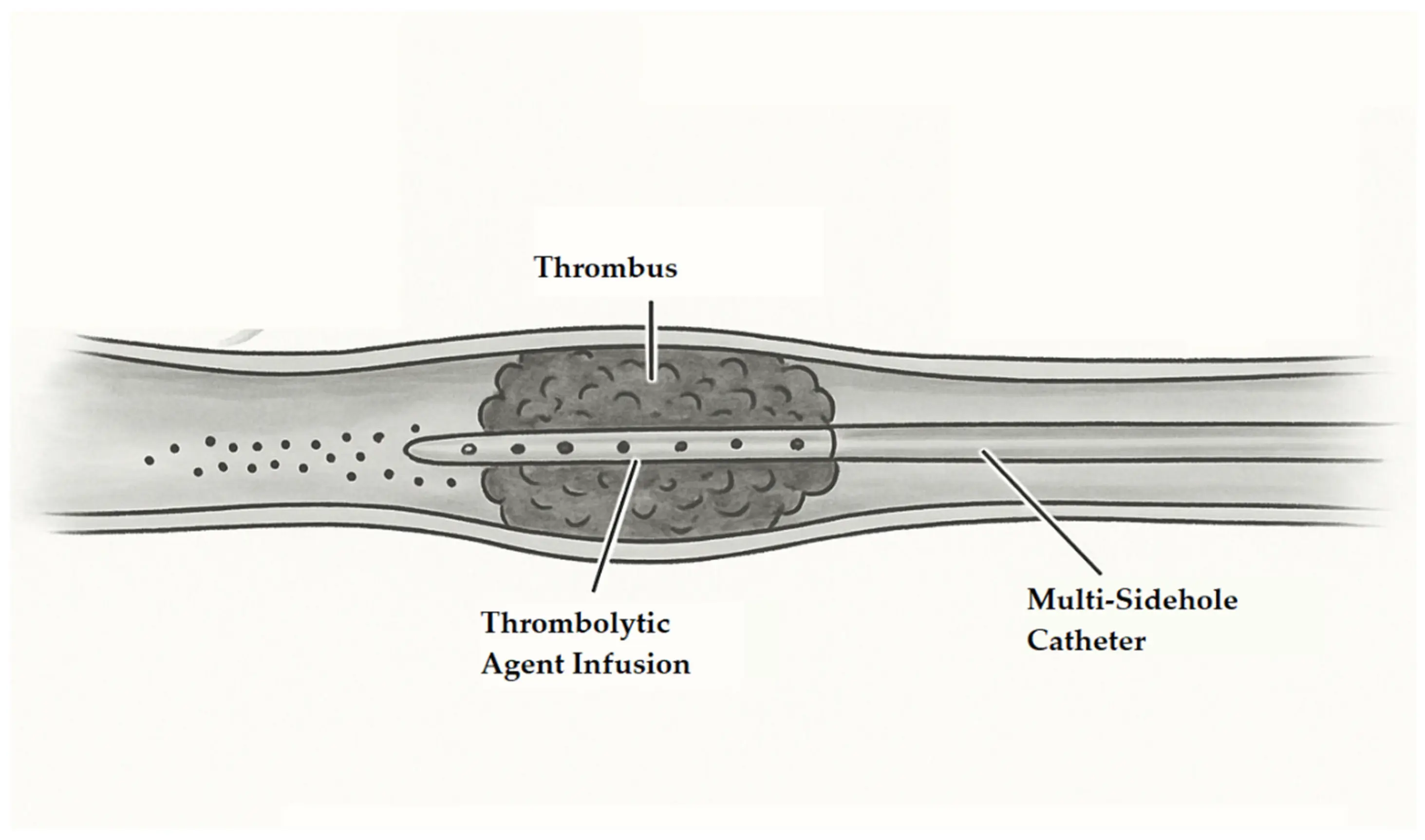
CDT stands for Catheter-Directed Thrombolysis, meaning clot dissolution guided by a catheter. In this method, a specialist physician inserts a thin dedicated catheter through a venous route and guides it near the clot. A thrombolytic, or clot-dissolving medication, is then injected directly at the site of obstruction.
The goals are:
To deliver medication directly to the clot
To provide more localized and targeted treatment
To increase vessel reopening in suitable patients
To help prevent long-term venous damage
For which diseases is a CDT catheter used?
The most important use of a CDT catheter is treatment of deep vein thrombosis (DVT), especially when the clot:
Is extensive
Is located in larger veins
Involves the pelvic, iliac, or femoral veins
Is associated with severe swelling and significant pain
Occurs in a young or active patient
Carries a high risk of chronic venous complications
In special cases, CDT may be considered for other thrombotic conditions, but its most common use is in selected acute DVT.
How does CDT treat a clot?
During CDT catheter treatment, the physician uses intravascular imaging and precise guidance to deliver the catheter to the clot. The clot-dissolving drug is then infused locally and in a controlled manner into the affected area.
This process helps:
Gradually break down the clot structure
Open the venous pathway
Improve blood flow
Reduce venous pressure
Decrease swelling and pain
In some patients, CDT is performed alone. In others, it may be combined with mechanical thrombectomy, thrombosuction, angioplasty, or venous stenting.
Educational video on how the CDT catheter works
Importance of CDT in blood clot treatment
The importance of CDT in DVT treatment is not limited to dissolving the clot. In suitable patients, it can help preserve normal venous function and reduce future complications.
Main reasons CDT is important:
Direct drug delivery to the clot
Reduction of clot burden in major veins
Support for faster return of blood flow
Reduced risk of permanent damage to venous walls and valves
Reduced likelihood of post-thrombotic syndrome in selected patients
Reduction of severe limb swelling and pain
Opportunity to treat underlying venous narrowing or obstruction at the same time
In extensive DVT, especially iliofemoral DVT, medication alone may leave residual clot that can damage the vein over time. In these situations, clot treatment with CDT catheter can significantly improve patient outcomes.
Which patients are candidates for CDT?
Not every patient with DVT needs CDT. Patient selection must be careful and based on clinical evaluation and imaging.
Patients who may benefit from CDT:
Patients with acute DVT
Extensive venous involvement
Clot in the iliac, femoral, or pelvic veins
Severe swelling, significant pain, or limb dysfunction
Younger and more active patients
Patients at high risk for post-thrombotic syndrome
Cases in which the goal is maximal long-term preservation of venous function
Which situations require caution?
High bleeding risk
History of active bleeding
Some recent surgeries
Stroke or certain brain conditions
Some coagulation disorders or special medical conditions
For this reason, the decision to perform CDT catheter treatment must be made by a specialist after full patient assessment.
How is CDT performed?
The details vary depending on the patient's condition and clot location, but the general process is:
1) Initial evaluation
The patient's condition, symptom severity, clot location, duration of symptoms, and bleeding risk are assessed.
2) Imaging and planning
The exact involved area is identified with ultrasound, venography, or other imaging methods.
3) Catheter entry into the venous system
The physician introduces the catheter through an appropriate venous route and advances it under imaging guidance toward the clot.
4) Infusion of clot-dissolving medication
The thrombolytic drug is delivered directly and in a controlled manner to the thrombus. In some cases, this infusion continues for several hours or for a defined period.
5) Reassessment of the vessel
After clot reduction, the vein is reassessed. If there is underlying stenosis or structural obstruction, additional treatment may be performed.
6) Additional treatments if needed
Some patients may also need:
Thrombosuction
Mechanical thrombectomy
Balloon angioplasty
Venous stenting
These may be used during or after CDT.
Benefits of clot treatment with CDT catheter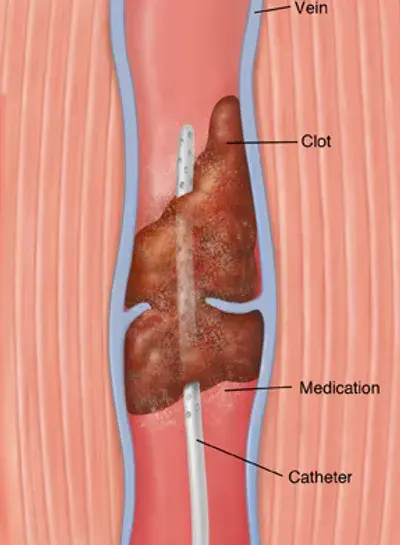
DVT treatment with CDT catheter has several benefits in suitable patients:
More targeted treatment compared with systemic drug infusion
Reduction of clot burden in major veins
Better relief of swelling and pain in selected cases
Help with maintaining vessel patency
Reduced risk of chronic venous damage
Ability to treat underlying narrowings at the same time
Improved quality of life in some patients
These benefits are most valuable when patient selection is correct and treatment timing is appropriate.
Does CDT completely replace anticoagulant medications?
No. Even in patients who undergo CDT, anticoagulant therapy usually remains an important part of treatment. CDT helps reduce and dissolve the clot, but medication is often needed to prevent new clot formation.
Therefore, CDT and anticoagulants often complement each other rather than fully replacing one another.
Which methods can be combined with CDT?
Modern interventional DVT treatment is often staged or combined. Depending on the patient, CDT may be combined with:
Thrombosuction
Part of the clot is removed or its volume reduced with a dedicated device.
Mechanical thrombectomy
Special devices may be used to fragment, mobilize, or remove clot.
Balloon angioplasty
If the vessel remains narrowed after clot removal, a balloon can widen the pathway.
Venous stenting
If persistent narrowing or compression exists, such as in some cases of May-Thurner syndrome, a stent may be needed.
Does CDT have risks or complications?
Every medical and interventional procedure can have possible complications. The most important issue with CDT is careful assessment of bleeding risk. Patient selection and controlled treatment conditions are therefore very important.
Possible complications or considerations:
Bleeding
Need for close monitoring during treatment
Reaction to medications or materials used
Residual clot
Need for additional treatment
In expert hands and under appropriate conditions, this method can be performed with careful planning and adequate monitoring.
The role of early diagnosis in CDT success
One of the most important factors in CDT catheter success is timely DVT diagnosis and early presentation. The fresher the clot, the better the chance of an appropriate response. Older clots become denser and may respond less completely.
For this reason, rapid evaluation is very important in patients who develop:
Sudden leg swelling
Severe calf or thigh pain
Heaviness and color change in the leg
Symptoms of acute DVT
CDT catheter treatment by Dr. Seyed Mohsen Jahromi Moghadam
Dr. Seyed Mohsen Jahromi Moghadam, Interventional Cardiology Fellow, uses expertise in endovascular and interventional therapies to evaluate and treat patients with DVT and selected cases requiring CDT catheter therapy.
CDT treatment requires:
Correct patient selection
Precise assessment of clot extent
Bleeding risk evaluation
Planning of endovascular treatment
Decision-making about additional treatments such as thrombosuction or venous stenting
This process must be performed within a specialized, patient-centered framework so the patient receives the most effective and safest treatment option.
Frequently asked questions about CDT catheter
1) What exactly is a CDT catheter?
A CDT catheter is an endovascular treatment in which clot-dissolving medication is injected directly into the clot through a catheter.
2) Which patients are suitable for CDT?
It is usually considered for patients with acute extensive DVT, especially involving the iliac and femoral veins, and for patients with severe symptoms.
3) Do all DVT patients need CDT?
No. Many patients are treated with anticoagulants, and only selected patients are candidates for CDT.
4) What is the advantage of CDT over standard medication?
In CDT, medication reaches the clot directly and in suitable patients can reduce clot burden more effectively and help preserve venous function.
5) Does CDT completely remove the clot?
Results depend on clot age, location, extent, and the patient's condition. In many cases, CDT significantly reduces clot burden and improves blood flow, but additional treatment may be needed.
6) Are medications still needed after CDT?
Usually yes. Anticoagulant therapy often remains an important part of treatment to prevent new clot formation.
7) Is CDT dangerous?
Like any intervention, it requires careful assessment and risk evaluation. The main concern is bleeding risk, which must be evaluated before treatment.
8) How is CDT different from thrombosuction?
CDT uses clot-dissolving medication, while thrombosuction attempts to remove or aspirate the clot using a device. The two methods are sometimes combined.
9) Is stenting sometimes needed after CDT?
Yes. If a vein is found to have underlying narrowing or compression after clot reduction, balloon angioplasty or venous stenting may be required.
10) Why is early presentation important?
The earlier treatment is performed in the acute phase, the better the chance of response and preservation of venous function.
Summary
CDT catheter is an important advanced method for treating selected cases of blood clots in the leg, or DVT. It delivers clot-dissolving medication directly and in a targeted manner to the thrombus to help reduce clot burden, reopen the vein, and reduce long-term complications.
This method is not suitable for every patient, but in acute, extensive, symptomatic DVT, especially involving large veins such as the iliofemoral segment, it can play a very important role. Correct patient selection, appropriate timing, and specialist evaluation are the three key factors in success.
If a patient develops sudden leg swelling, pain, heaviness, limb discoloration, or a history of venous clot, rapid specialist evaluation is very important for choosing the best treatment.