


Hi there! How can we help you today?

Percutaneous Closure of Congenital PFO in the Heart
PFO closure by intervention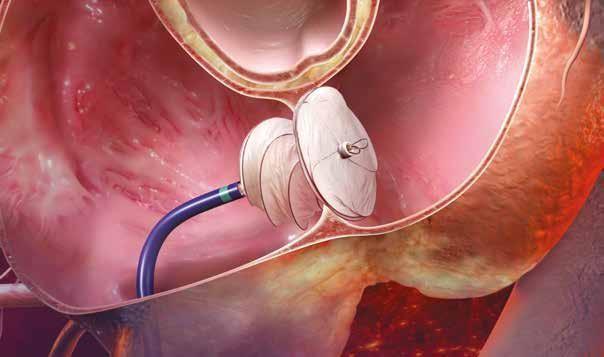
The standard, minimally invasive treatment for patent foramen ovale
Percutaneous PFO Closure is one of the most advanced and standard treatment methods for patent foramen ovale. In recent years, major progress has been made in procedural technique, safety, and device quality.
Today, this method is recognized as the treatment of choice (Gold Standard) in selected patients and is associated with highly successful short-term and long-term outcomes.
✅ This treatment is performed by Dr. Seyed Mohsen Jahromi Moghaddam,
fellowship-trained in cardiovascular interventions
and is carried out in advanced subspecialty hospitals in Mashhad.
What is PFO? (Patent Foramen Ovale)
Patent foramen ovale (PFO) refers to a defect in the wall between the right and left atria of the heart, caused by incomplete fusion of the two layers of the atrial septum.
Anatomy of PFO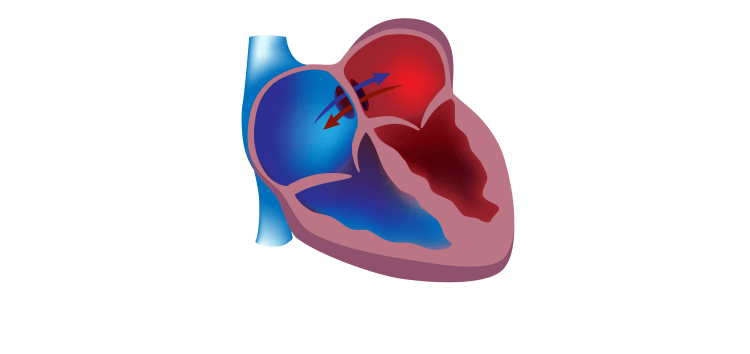
- During fetal life, an opening called the foramen ovale is naturally present.
- After birth, when the newborn begins breathing, this opening should close.
- In about 20% of the population, this opening does not close completely and remains as a valve-like channel called a PFO.
Many affected individuals remain asymptomatic for years, and the condition is often diagnosed incidentally.
Symptoms of PFO
In most cases, there are no clear clinical symptoms.
However, in some patients, PFO may be associated with the following conditions:
- Cryptogenic stroke
- Transient ischemic attacks (TIA)
- Treatment-resistant migraine
- Reduced blood oxygen saturation (in selected cases)
Complications and importance of PFO treatment
Although PFO is harmless in most people, in selected cases it can predispose to:
- Passage of a clot from the right atrium to the left atrium (paradoxical embolism)
- Increased risk of stroke
- Blood oxygenation disorders
📌 For this reason, PFO closure in selected patients can significantly reduce the risk of serious complications.
Diagnosis of PFO
Accurate diagnosis and proper patient selection for intervention play a key role in treatment success.
Diagnostic methods
- Transthoracic echocardiography (TTE)
- Color Doppler echocardiography
- Bubble test (saline contrast study)
- Transesophageal echocardiography (TEE) ← the most accurate method for diagnosis and assessment of PFO anatomy
If associated heart diseases are present, the following may also be requested: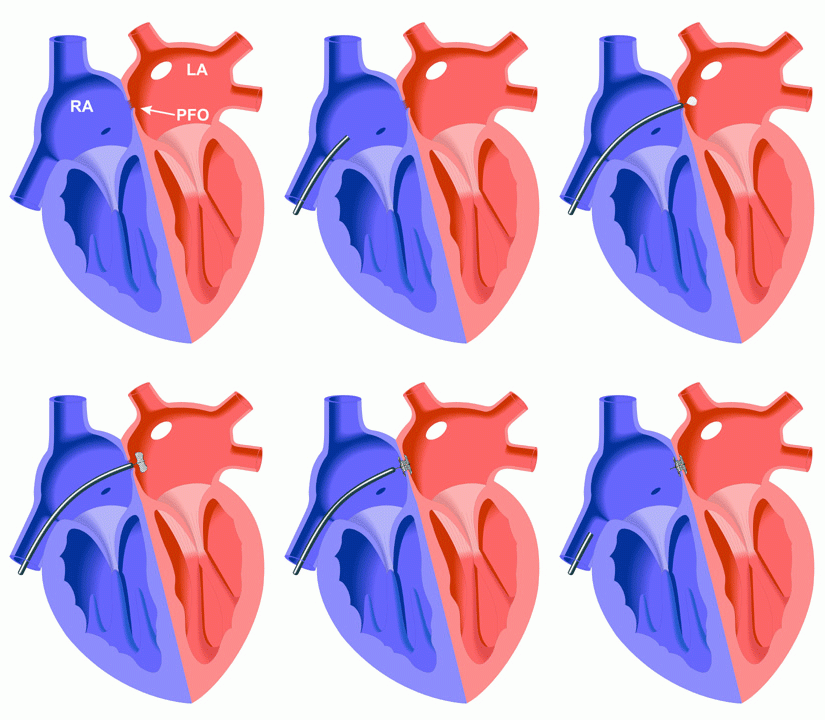
- Cardiac CT scan
- Cardiac MRI
These tests may also be ordered.
PFO closure by intervention (non-surgical method)
Why intervention?
- No open-heart surgery
- No chest incision
- Short recovery period
- No need for lifelong anticoagulant therapy
How it is performed
This procedure is performed through the femoral vein (groin) under fluoroscopic guidance and, in some cases, transesophageal echocardiography.
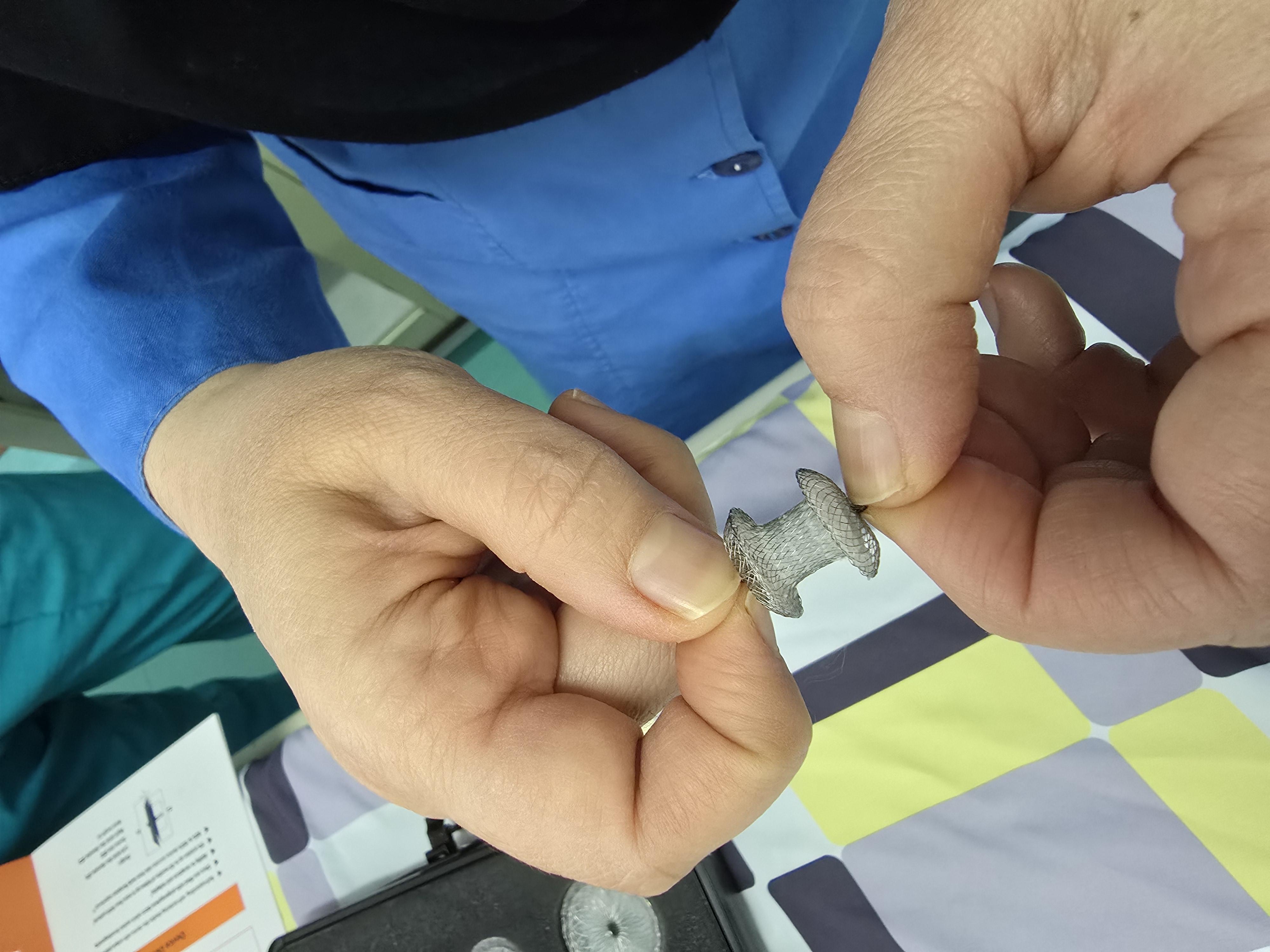
An umbrella-shaped device (occluder device) is placed on both sides of the opening and closes it completely.
🔹 Within about 6 months, this device becomes covered with a layer of endocardial cells and becomes part of the heart wall.
Preparation before intervention
Essential steps
- Cardiac echocardiography and transesophageal echocardiography
- Electrocardiogram and chest X-ray
- Blood tests (CBC, coagulation tests, kidney function)
- Pregnancy assessment in women of childbearing age
📌 All diagnostic and treatment steps are performed under the supervision of Dr. Seyed Mohsen Jahromi Moghaddam and the subspecialty team in Mashhad.
During and after the procedure
- Performed in the angiography suite
- Usually without general anesthesia
- One-night hospitalization in the CCU
- Continuous monitoring of vital signs and ECG
✅ Success rate: 90% to 99%
✅ Serious complication rate: less than 5%
Possible complications (rare but important to explain)
- Bleeding or hematoma at the catheter entry site
- Transient arrhythmias
- Reaction to sedative medications
- In very rare cases: device displacement and the need for emergency surgery
Care after PFO closure
Medication therapy
- Aspirin 80-100 mg daily
- Clopidogrel 75 mg daily
⏱ For 6 months
Activity
- Return to normal life from the next day
- Avoid strenuous activity for one month
Pregnancy
- Permitted after 6 months
- With consultation from a cardiologist and gynecologist
Dentistry and surgery
- Postpone non-urgent bleeding procedures for 6 months
- Use prophylactic antibiotics to prevent endocarditis
Why choose Dr. Seyed Mohsen Jahromi Moghaddam for PFO closure?
- Fellowship-trained in cardiovascular interventions
- Extensive experience in PFO and ASD closure
- Use of the most up-to-date cardiac occluder devices
- Procedures performed in highly advanced hospitals in Mashhad
- Full adherence to international treatment standards
📞 For specialized consultation and PFO closure evaluation
Contact the specialized cardiovascular center of Dr. Seyed Mohsen Jahromi Moghaddam - Mashhad.
05132042 - 09003204200