

Hi there! How can we help you today?
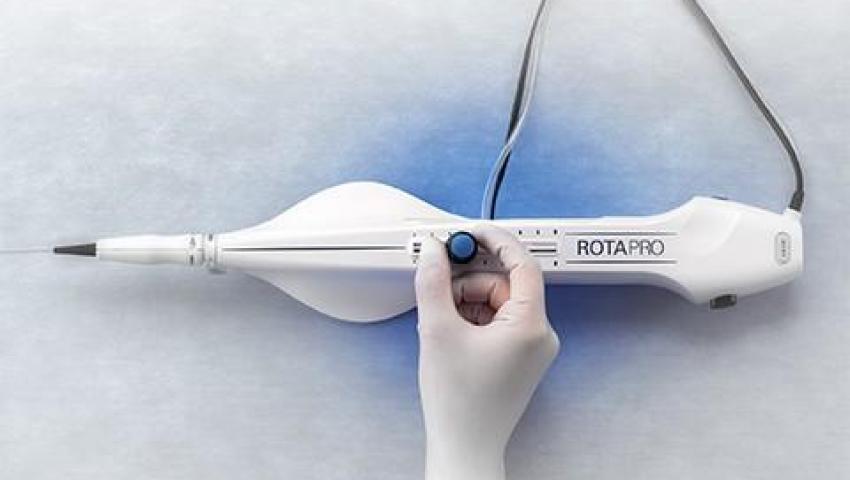
Opening Heart Arteries with a Diamond Burr (Rotablator)
A breakthrough in treating hard coronary stenoses
Rotablator in Coronary Angioplasty | Treatment of Severe Calcified Coronary Stenoses in Mashhad
Opening heart arteries that cannot be opened with conventional methods
In many patients, coronary artery stenosis is successfully treated with standard angioplasty methods such as balloon angioplasty and stenting. In some cases, however, the plaques inside the artery are so hard, calcified, and resistant that the balloon cannot open them, or the stent does not expand properly at the target site. In such situations, more advanced methods are necessary. One of the most important and effective of these methods is the Rotablator (rotational atherectomy).
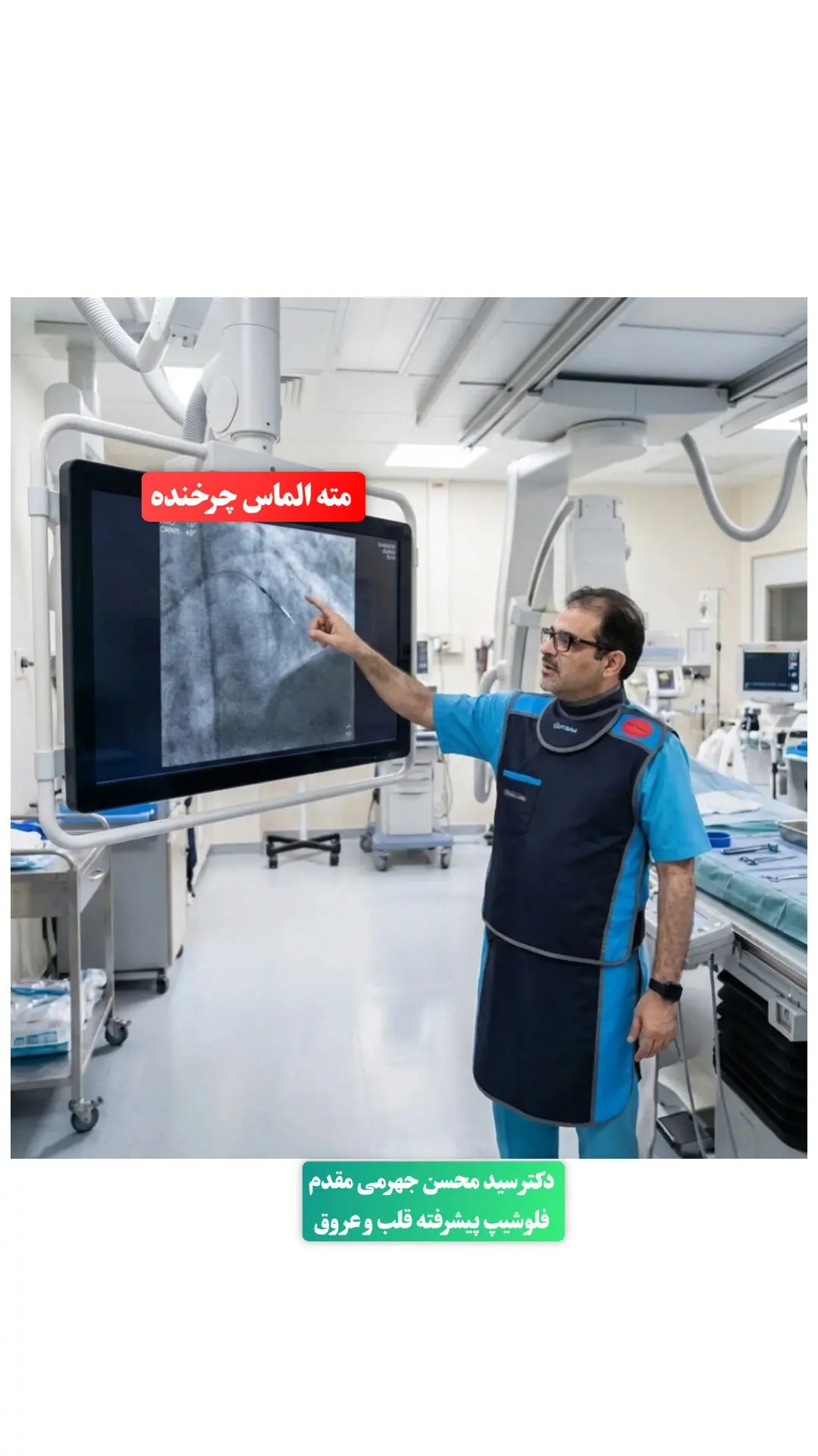
Dr. Seyed Mohsen Jahromi-Moghadam, cardiologist and fellowship-trained specialist in advanced cardiac interventions, performs this specialized procedure in Mashhad for patients with complex, calcified coronary artery stenoses.
What is Rotablator?
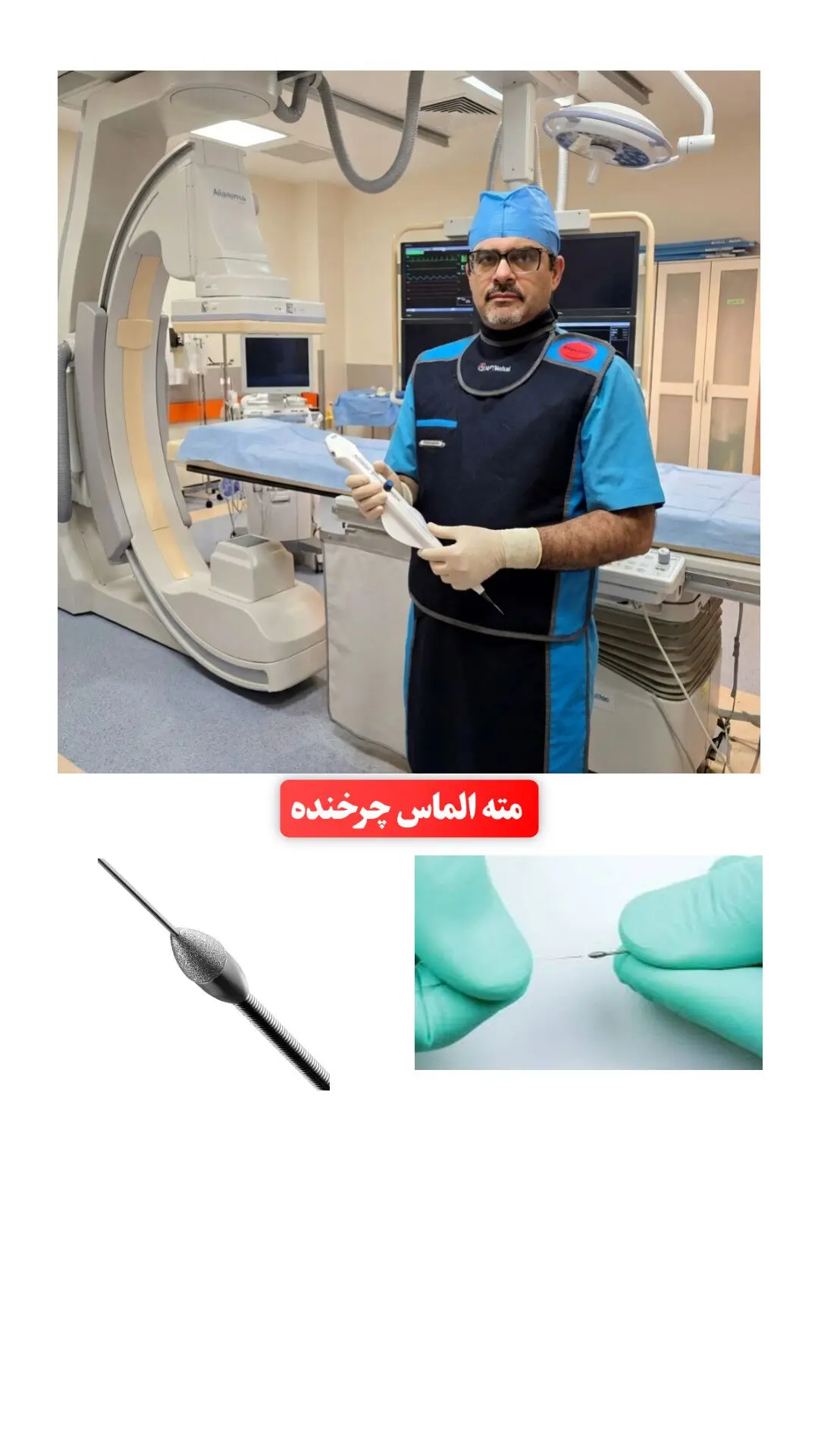
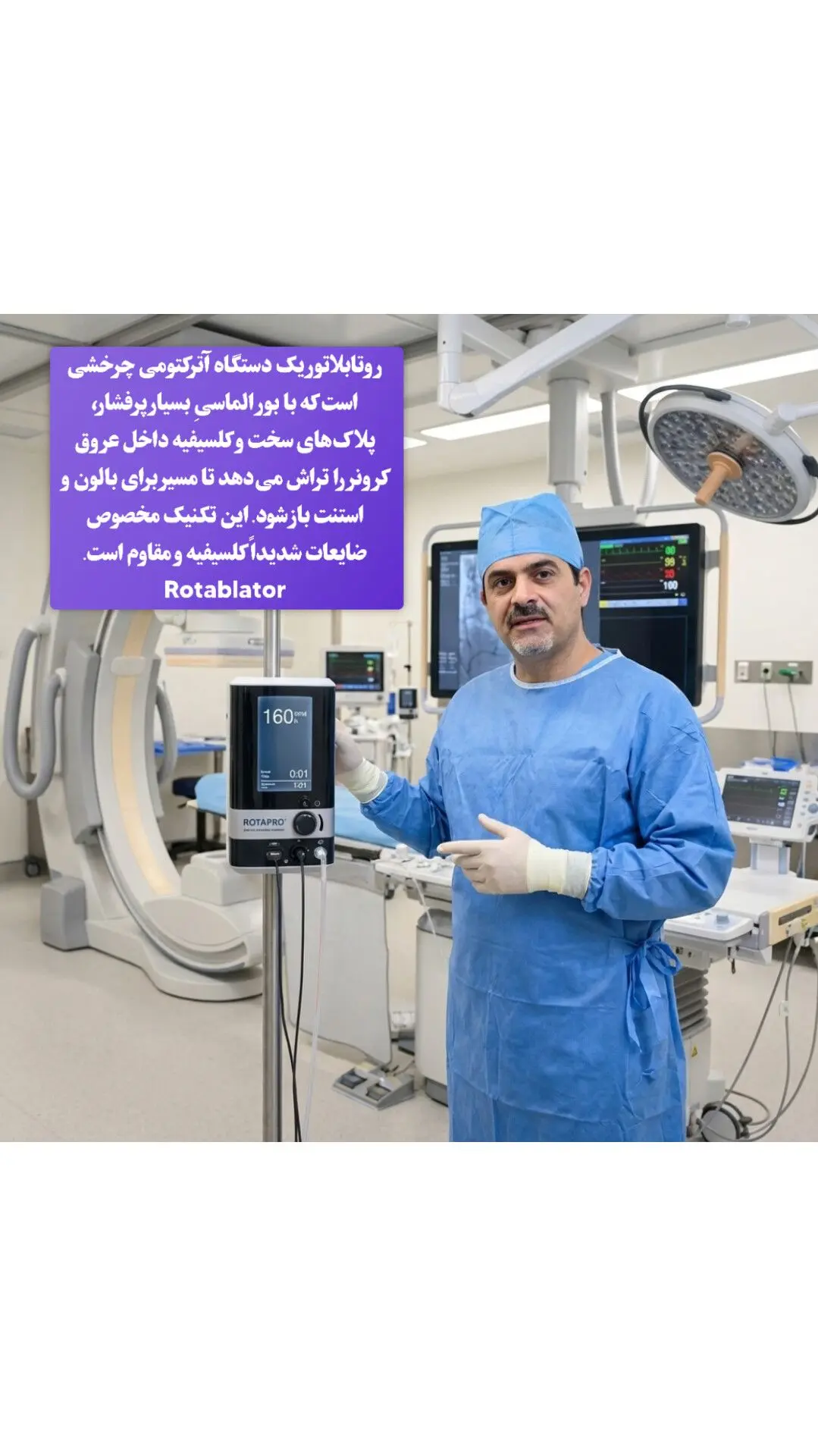
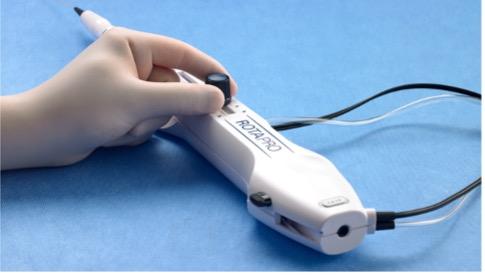
Rotablator is a specialized device used in coronary angioplasty to ablate and reduce the volume of hard, calcified plaques inside the coronary arteries. This method is used in patients in whom severe calcium deposition in the vessel wall makes it impossible to open the artery with a standard balloon or to place a stent properly.
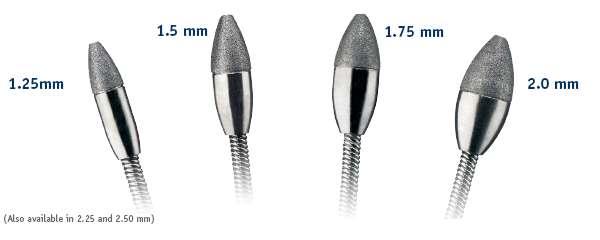
In this technique, a very small burr coated with microscopic diamond particles rotates at very high speed and converts the hard plaque inside the artery into extremely fine particles. This prepares the vessel pathway for balloon passage and full stent expansion.

Why do some coronary arteries not open with conventional methods?
In some patients, especially older adults, patients with diabetes, patients with chronic kidney disease, and people who have had atherosclerosis for years, the plaques inside the arteries gradually develop severe calcification. These plaques:
Are very hard and resistant
Resist balloon inflation
Do not allow full stent expansion
Increase the likelihood of failure with conventional angioplasty
Increase the risk of restenosis or stent thrombosis
In these situations, if stenting is performed without proper vessel preparation, the stent may not fully expand and the treatment result may be suboptimal. For this reason, Rotablator is used as a very important adjunctive tool.
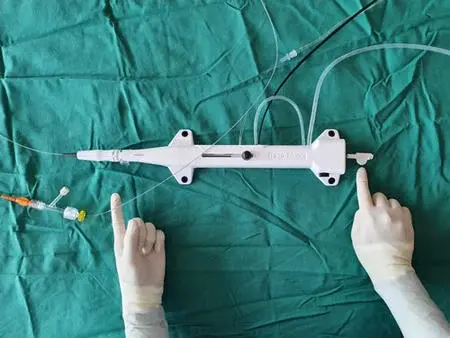
Angioplasty assisted by Rotablator or diamond burr, performed by Dr. Seyed Mohsen Jahromi-Moghadam
How does Rotablator work?
The principle of Rotablator is based on mechanical ablation of calcified plaques. This device has a small rotating tip called a burr, which rotates at approximately 140,000 to 180,000 revolutions per minute.
Mechanism of action:
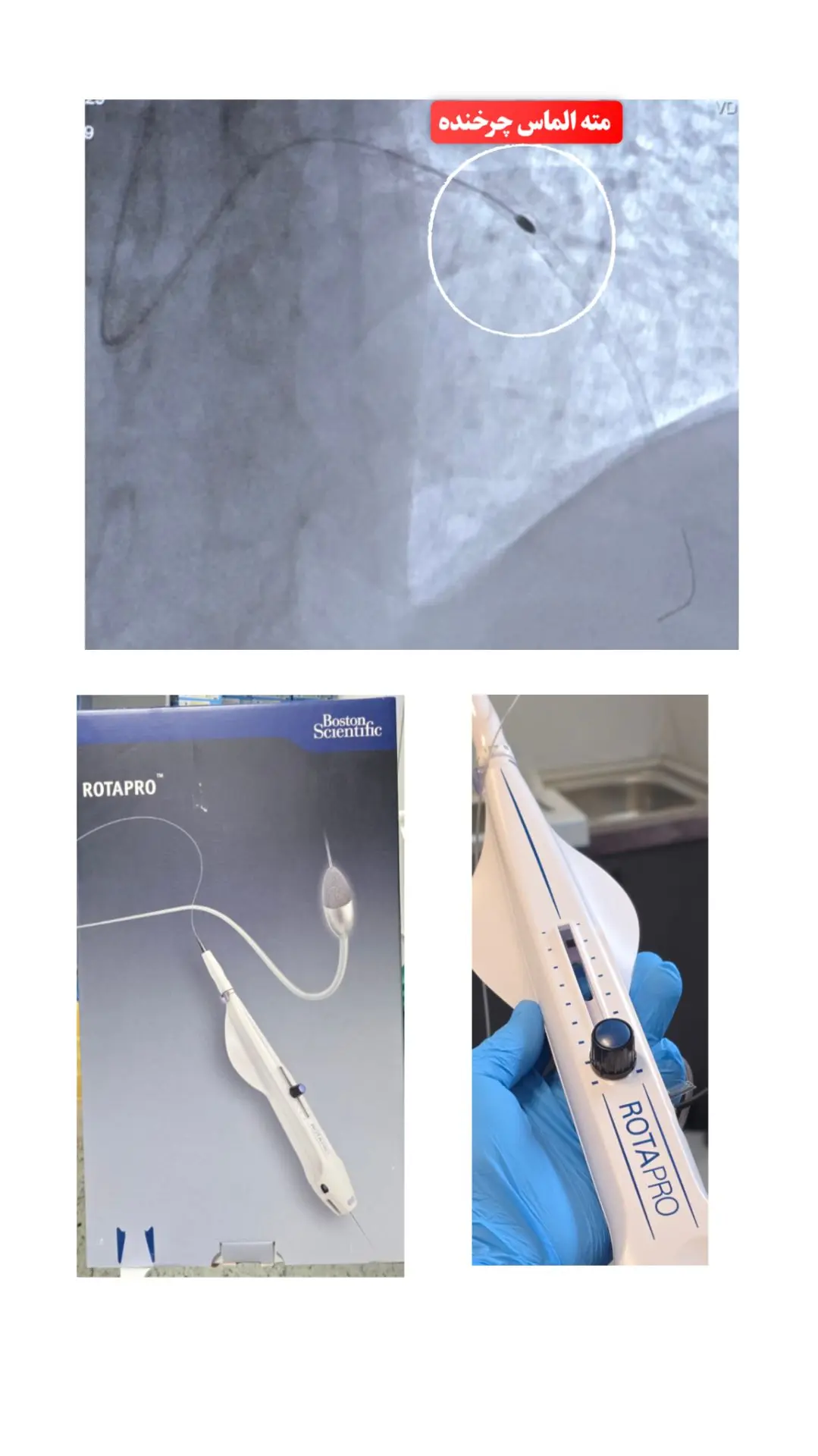
The rotating burr enters the artery over a special guidewire
It reaches the site of stenosis and calcium deposits
It converts the hard plaque into very fine microscopic particles
These small particles are carried away from the site by blood flow
The vessel pathway becomes prepared for balloon and stent delivery
An important point is that this device mainly affects hard, calcified tissue, while softer and more flexible vessel tissue is less affected. This feature has made Rotablator one of the effective and safe methods for complex coronary lesions.
In which patients is Rotablator used?
This method is not needed for all patients and is usually used in special cases and complex lesions.
Suitable patients for Rotablator:
Patients with severe calcified coronary artery stenosis
Patients in whom the balloon cannot cross the stenosis or cannot be inflated
Patients in whom the stent does not fully expand
Patients with severe calcification on angiography or intravascular imaging
People with long, hard lesions resistant to conventional treatment
Diabetic patients with extensive calcium deposits
Older adults with stiff, calcified arteries
Patients who have previously undergone stenting but whose stent is underexpanded because of severe calcium
How is Rotablator performed?
Rotablator is performed in the cardiac catheterization laboratory under fully controlled conditions. This method is usually part of an advanced angioplasty procedure and is performed before stent placement.
Procedure steps:
1. Establishing vascular access
As in standard angioplasty, the physician enters the vascular system through the wrist artery or the groin artery.
2. Precise assessment of the stenosis site
Using angiography and, when necessary, intravascular imaging tools such as IVUS or OCT, the severity and extent of calcium are assessed.
3. Passing the special wire
A dedicated guidewire is passed across the stenosis so the Rotablator device can move over it.
4. Selecting the appropriate burr
Depending on vessel diameter and lesion type, an appropriately sized burr is selected.
5. Ablating the calcified plaque
The burr begins rotating at high speed, and the physician slowly and carefully advances it across the plaque to ablate the calcium.
6. Final vessel preparation
After reducing plaque hardness, a balloon and then a stent are used so the artery can be fully opened and stabilized.
Full video of using the Rotablator device or diamond burr
Why is Rotablator used?
The main purpose of using Rotablator is proper preparation of very hard arteries for successful stent placement. In fact, this device is used when conventional methods alone are not sufficient.
The most important reasons for use:
Opening lesions that cannot be treated with a standard balloon
Reducing the risk of incomplete stent expansion
Increasing the chance of angioplasty success in calcified lesions
Reducing the chance of recurrent stenosis
Preventing complications caused by incomplete stenting
Providing effective treatment for the most complex coronary stenoses
Benefits of Rotablator
Use of Rotablator in selected patients can greatly improve treatment quality.
Benefits:
Increased success in treating severe, resistant stenoses
Enables stent placement in severely calcified arteries
Better and more complete stent expansion
Reduced risk of restenosis
Reduced need for high balloon pressure
Helps treat complex and chronic lesions
Is Rotablator dangerous?
Rotablator is a specialized and advanced method that must be performed by an experienced physician in equipped centers. Like any cardiac intervention, this method may be associated with possible complications, but in the hands of an experienced specialist and with proper patient selection, it is usually performed with high safety.
Possible complications:
Temporary slowing of blood flow in the artery
Vascular spasm or irritation
Formation of tiny particles and microembolization
Injury to the vessel wall in rare cases
Temporary arrhythmia during the procedure
Need for careful monitoring during and after the procedure
For this reason, the physician's experience in performing this procedure is very important.
Care after Rotablator
After this procedure and stenting, care is similar to other angioplasty procedures; however, because the lesion is complex, closer follow-up is more important.
Post-procedure recommendations:
Rest as advised by the physician
Check the catheter entry site
Take antiplatelet medications regularly
Control blood pressure, blood sugar, and blood lipids
Stop smoking
Follow a heart-healthy diet
Attend regular follow-up visits
Difference between Rotablator and standard angioplasty
| Feature | Standard angioplasty | Rotablator |
|---|---|---|
| Lesion type | Typical stenoses | Severe calcified stenoses |
| Main tool | Balloon and stent | Rotating ablation burr + balloon and stent |
| Use | Opening expandable arteries | Preparing hard, calcified arteries |
| Suitable for severely calcified plaque | Usually limited | Highly effective |
| Procedure complexity | Lower | Higher and more specialized |
Rotablator in Mashhad
Patients with severe, calcified, and resistant coronary artery stenosis need specialized evaluation by a subspecialist in advanced cardiac interventions.
Dr. Seyed Mohsen Jahromi-Moghadam, with experience in advanced interventional procedures including Rotablator in Mashhad, provides treatment for patients with complex coronary lesions.
If you have been told during a previous angiography or angioplasty that your coronary artery is too stiff, calcified, or not openable with a standard balloon, you may be an appropriate candidate for this method.
Example of a vessel opened with the diamond burr device by Dr. Seyed Mohsen Jahromi-Moghadam
Frequently asked questions about Rotablator
1. What is Rotablator?
Rotablator is a specialized device used to ablate very hard, calcified plaques inside the coronary arteries so the vessel pathway is prepared for balloon angioplasty and stenting.
2. Why do some patients need Rotablator?
Because in some patients, the plaque inside the artery is so hard and calcified that balloon and stent alone cannot open it completely.
3. Is Rotablator a replacement for stents?
No. Rotablator is usually used before stenting to prepare the artery for proper stent placement.
4. Is this procedure painful?
Usually not. This procedure is performed during catheterization under local anesthesia and necessary medications, and the patient does not feel significant pain.
5. Which patients is Rotablator suitable for?
It is suitable for patients with severe calcified coronary artery stenosis, balloon-resistant lesions, underexpanded stents, patients with diabetes, older adults, and patients with chronic kidney disease.
6. Does Rotablator have risks?
Like any invasive cardiac procedure, possible complications exist, but when performed by an experienced physician, this method is safe and highly effective.
7. Is a stent needed after Rotablator?
In most cases, yes. This method is performed to prepare the vessel, and stenting is then performed.
8. What is the difference between Rotablator and a standard balloon?
A balloon only expands the artery, but Rotablator first ablates the hard, calcified plaque so the artery can open properly.
9. Is Rotablator performed in Mashhad?
Yes. Dr. Seyed Mohsen Jahromi-Moghadam performs this advanced method in Mashhad for patients with complex coronary lesions.
10. Do all cardiac patients need Rotablator?
No. This method is used only for selected cases and severe calcified lesions.