


Hi there! How can we help you today?

Exercise Stress Test
One of the most important and practical methods for evaluating heart function during physical activity
Exercise stress testing at Delban Advanced Cardiovascular Clinic under the supervision of Dr. Seyed Mohsen Jahromi-Moghadam
A cardiac exercise stress test, or Exercise Stress Test, is an important, noninvasive, and practical method for evaluating heart function during physical activity. Many heart problems may not be apparent at rest, but during activity, as the heart rate rises and the heart muscle's need for blood and oxygen increases, symptoms and cardiac changes may become evident.
At Delban Advanced Cardiovascular Clinic in Mashhad, cardiac exercise stress testing is performed with advanced equipment, precise ECG and blood pressure monitoring, and under the supervision of Dr. Seyed Mohsen Jahromi-Moghadam, so the patient's cardiac evaluation is carried out with high accuracy and safety.
What is a cardiac exercise stress test?
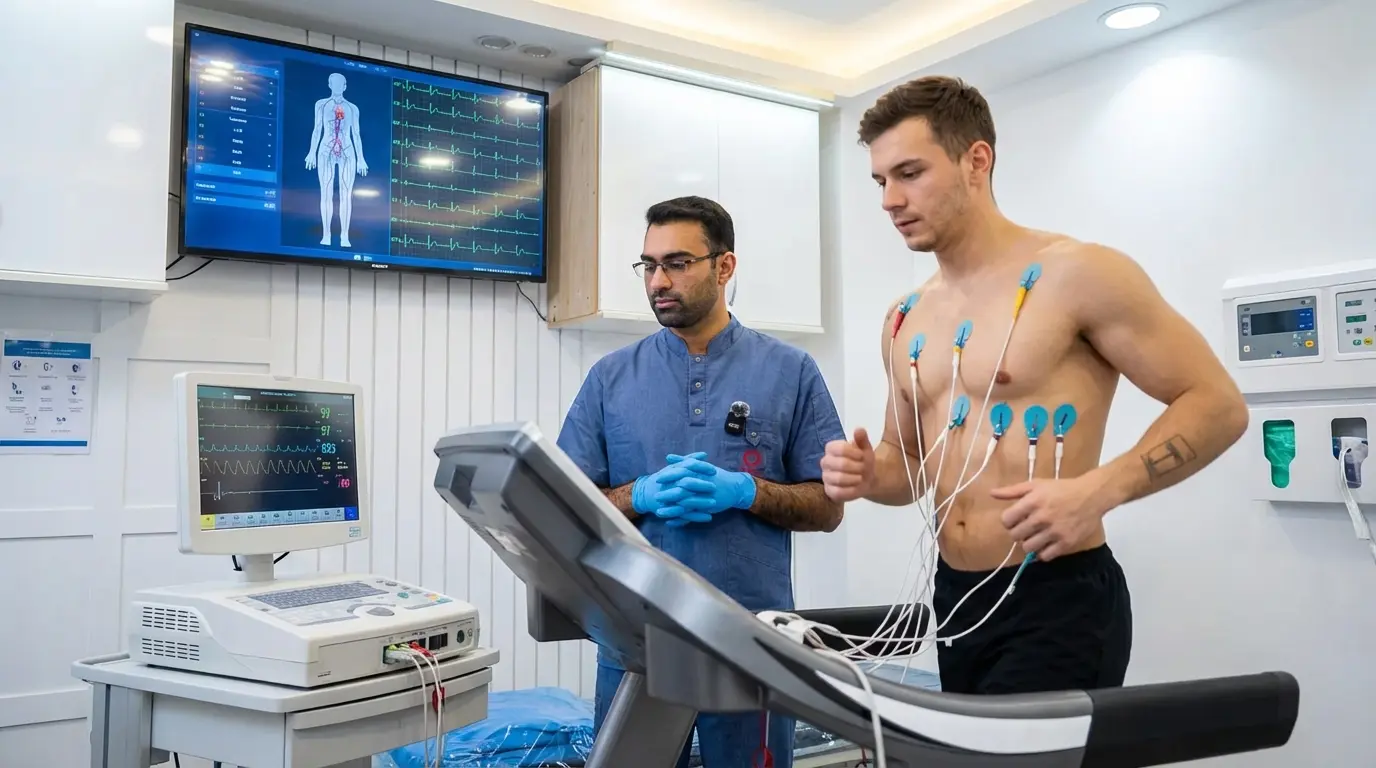
A cardiac exercise stress test is a diagnostic evaluation in which heart activity is assessed under gradually increasing physical exertion. In this test, the patient usually walks on a treadmill, while the following are monitored at the same time:
Electrocardiogram, or ECG
Heart rate
Blood pressure
Clinical symptoms such as chest pain, shortness of breath, dizziness, or fatigue
Heart rhythm changes during activity
These are continuously monitored by the healthcare team.
The goal of this test is to determine whether the patient's heart functions normally under conditions similar to daily activities or exercise, or whether there are problems with blood supply, rhythm, or exercise tolerance.
Why is a cardiac exercise stress test performed?
The heart may function normally at rest, and even the patient's ECG may be reported as normal; however, during activity, the heart's oxygen demand increases. If the coronary arteries are narrowed or blocked, the heart muscle may not receive enough blood, and changes in the ECG or patient symptoms may appear.
For this reason, the exercise stress test is one of the important methods for evaluating possible coronary artery disease and assessing heart function under controlled stress.
Why a cardiac exercise stress test may be necessary
An exercise stress test can help the physician evaluate the patient's heart status more accurately and make a more appropriate treatment decision if needed.
The most important reasons for performing an exercise stress test include:
Evaluating the cause of chest pain
Assessing shortness of breath during activity
Evaluating possible narrowing of the coronary arteries
Diagnosing cardiac ischemia or reduced blood flow to the heart muscle
Assessing arrhythmias or heart rhythm disturbances during activity
Evaluating exercise capacity and cardiac tolerance
Assessing the blood pressure response to physical activity
Evaluating the effectiveness of cardiac medications
Assessing the patient's condition after angiography, angioplasty, or cardiac surgery
Evaluating heart health before starting professional sports or heavy physical activity
Assessing cardiac readiness before some non-cardiac surgeries
What conditions can an exercise stress test identify?
A cardiac exercise stress test can play an important role in diagnosing, evaluating, or ruling out certain heart diseases and disorders.
Conditions evaluated with an exercise stress test include:
Coronary artery disease, or CAD
Angina pectoris
Silent cardiac ischemia
Heart rhythm disorders during exercise
Abnormal rise or drop in blood pressure during activity
Reduced functional capacity of the heart
Assessment of the possible risk of cardiac events in some high-risk patients
It should be noted, however, that an exercise stress test alone does not replace all cardiac evaluations, and its interpretation must be based on the patient's condition, examination, medical history, medications, and other tests.
Who is an exercise stress test recommended for?
Based on symptoms, age, medical history, and cardiac risk factors, the physician may recommend an exercise stress test.
This test is usually useful for the following people:
People who experience pain or pressure in the chest
People who develop shortness of breath during activity
Patients with high blood pressure
Patients with diabetes
People with high blood lipids
Smokers or people who are overweight
Those with a family history of heart disease
People over 40 before starting strenuous exercise
Patients after cardiac procedures such as angioplasty or stent placement
Athletes or people with heavy physical activity
Patients whose physician needs to assess cardiac exercise tolerance
How is a cardiac exercise stress test performed?
At Delban Clinic, the exercise stress test is performed step by step under complete monitoring.
Steps of the exercise stress test:
1. Initial patient assessment
Before the test begins, the patient's general condition, symptoms, medical history, and current medications are reviewed. Blood pressure and a resting ECG are also recorded.
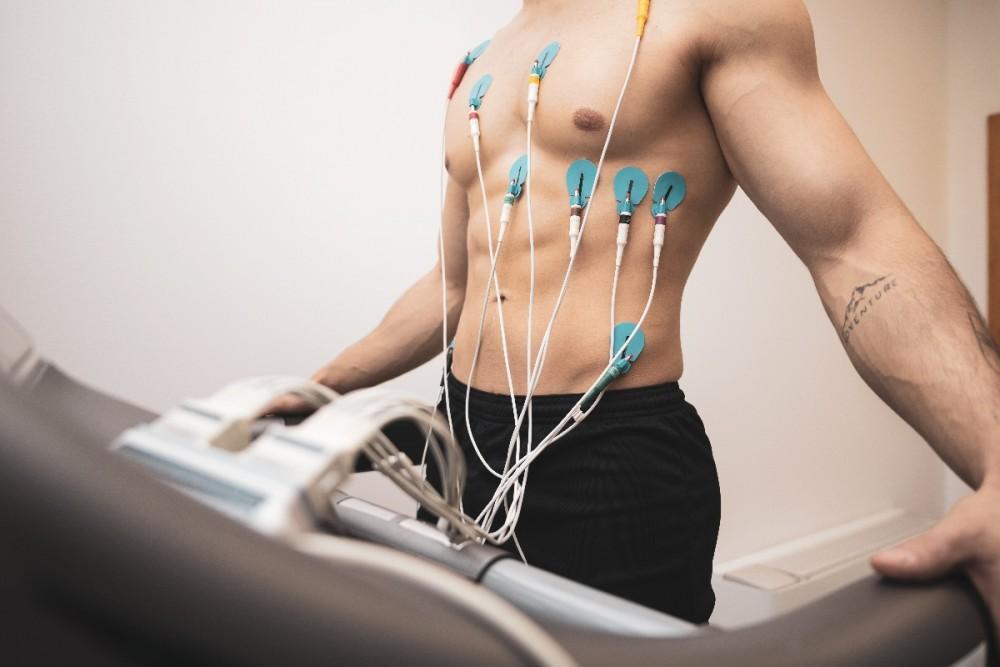
2. Attaching ECG electrodes
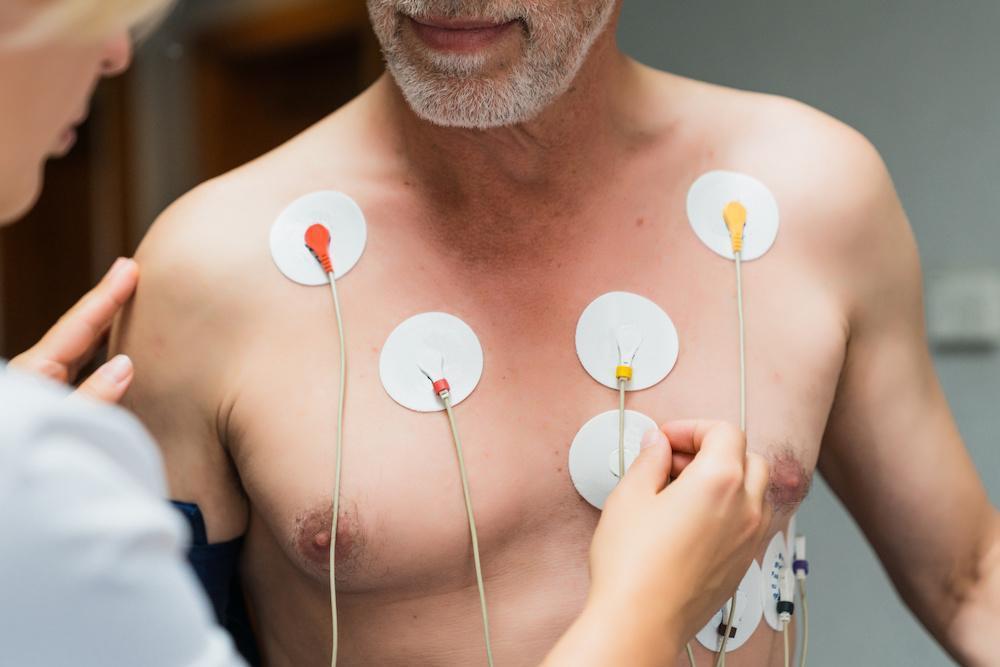
Special electrodes are placed on the patient's chest so the heart's electrical activity can be recorded throughout all stages of the test.
3. Starting activity on the treadmill
The patient begins walking on the treadmill. The speed and incline of the device are gradually increased according to a standard protocol.
4. Continuous monitoring during the test
During the test, the following are continuously monitored:
Heart rhythm and ECG
Heart rate
Blood pressure
Breathing status
Patient symptoms such as chest pain, dizziness, weakness, or shortness of breath
5. Stopping the test at the appropriate time
The test is stopped if the patient reaches the target heart rate, becomes sufficiently fatigued, develops specific symptoms, or shows abnormal ECG changes.
6. Recovery phase
After activity ends, the patient remains at rest or walks slowly for a few minutes, while the ECG and blood pressure continue to be monitored.
The total test time is usually about 15 to 40 minutes, but the duration of treadmill activity varies depending on the patient's cardiac condition and physical capacity.
Is a cardiac exercise stress test dangerous?
An exercise stress test is a noninvasive, safe procedure that does not require anesthesia. However, because the heart is placed under activity and an increased heart rate, it must be performed in an appropriate medical setting under physician supervision.
At Delban Advanced Cardiovascular Clinic, the exercise stress test is performed with safety standards, continuous patient monitoring, and the presence of a healthcare team. If any abnormal sign is observed, the test is stopped immediately.
Who should not undergo an exercise stress test?
In some conditions, an exercise stress test may not be appropriate or must be performed with special caution. The final decision in this regard is made by the physician.
Conditions that may prevent an exercise stress test include:
Unstable or severe chest pain
Recent heart attack
Uncontrolled arrhythmias
Severe or uncontrolled heart failure
Very high and uncontrolled blood pressure
Severe aortic valve stenosis
Severe mobility problems that prevent walking on a treadmill
Certain acute respiratory or general medical conditions
For this reason, an initial physician assessment before the test is very important.
Preparation before an exercise stress test
To make the test result more accurate and the test safer, it is important to follow a few recommendations before coming to the clinic.
Important recommendations before an exercise stress test:
1. Bring suitable clothing and shoes
It is best to wear comfortable clothing and athletic shoes or appropriate walking shoes so you can walk comfortably on the treadmill.
2. Avoid heavy meals
Avoid eating a heavy meal at least 2 to 3 hours before the test. A light meal at an appropriate interval is usually acceptable unless your physician advises otherwise.
3. Limit caffeine and tobacco
It is better to avoid strong tea, coffee, energy drinks, and tobacco for several hours before the test, as they may affect heart rate and blood pressure.
4. Inform the clinic about your medications
If you take heart medications, blood pressure medications, diabetes medications, or any special medications, be sure to inform the physician or clinic staff before the test.
Some medications may affect the test result, but stopping or changing medications should only be done under physician guidance.
5. Bring your medical records
If you have previous ECGs, echocardiography reports, blood tests, angiography reports, hospitalization records, or a medication list, it is best to bring them with you.
6. Report any new symptoms
If on the day of the test you have chest pain, severe shortness of breath, dizziness, weakness, fever, or unusual symptoms, be sure to report them before starting the test.
7. Diabetic patients should take precautions
People with diabetes should coordinate with their physician about the timing of meals, medications, or insulin before the test to prevent low blood sugar.
8. Men are advised to shave chest hair.
How is a cardiac exercise stress test interpreted?
The result of an exercise stress test is not determined only by how long the patient walks on the treadmill. The cardiologist reviews a set of information, including:
ECG changes during activity
Heart rate and whether the target heart rate is reached
Blood pressure response to exercise
Patient symptoms during the test
Functional capacity and exercise tolerance
Recovery pattern of heart rate and blood pressure
Medical history and cardiac risk factors
At Delban Clinic, exercise stress test interpretation is performed by Dr. Seyed Mohsen Jahromi-Moghadam, so the final result is reviewed with precision and specialist insight.
Advantages of having an exercise stress test at Delban Advanced Cardiovascular Clinic
Having an exercise stress test at a specialized cardiac center is important because both equipment quality and physician experience in interpreting results play a major role in accurate diagnosis.
Advantages of exercise stress testing at Delban Clinic:
Testing under the supervision of Dr. Seyed Mohsen Jahromi-Moghadam
Use of advanced cardiac monitoring equipment
Precise assessment of ECG, blood pressure, and patient symptoms
A safe, calm, and specialized environment
Suitable for cardiac patients, older adults, and high-risk individuals
Ability to make rapid decisions about further evaluations if needed
Testing performed according to standard cardiovascular principles
Exercise stress testing in Mashhad; Delban Heart Clinic
If your physician has prescribed an exercise stress test, or if you need a heart health evaluation because of chest pain, shortness of breath, a family history of heart disease, diabetes, high blood pressure, or high cholesterol, you can visit Delban Advanced Cardiovascular Clinic for a cardiac exercise stress test in Mashhad.
This test is performed at Delban Clinic with precise monitoring, specialized equipment, and under the supervision of Dr. Seyed Mohsen Jahromi-Moghadam.
Frequently asked questions about cardiac exercise stress testing
Is an exercise stress test painful?
No. An exercise stress test is a noninvasive procedure and is not painful. The patient simply walks on a treadmill while the ECG and blood pressure are monitored.
How long does an exercise stress test take?
The total test usually takes 15 to 40 minutes. The duration of treadmill activity varies depending on the patient's physical capacity and heart condition.
Should medications be stopped before an exercise stress test?
No. Do not stop any medication on your own. Be sure to coordinate with the physician or clinic staff regarding your medications.
Is an exercise stress test suitable for everyone?
No. Some patients may not be suitable candidates because of specific cardiac or general medical conditions. The final decision is made by the cardiologist.
What happens if I develop pain or shortness of breath during the test?
Your condition is continuously monitored throughout the test. If abnormal symptoms occur, the test is stopped immediately and the necessary measures are taken.
Summary
A cardiac exercise stress test is one of the important methods for evaluating heart function during activity and can help diagnose problems such as reduced blood flow to the heart, coronary artery disease, exercise-related arrhythmias, and reduced exercise tolerance.
At Delban Advanced Cardiovascular Clinic in Mashhad, the exercise stress test is performed with advanced equipment and under the supervision of Dr. Seyed Mohsen Jahromi-Moghadam, so patients can evaluate their heart status with greater confidence.
To book a cardiac exercise stress test, you can use the appointment system or contact Delban Clinic.