


Hi there! How can we help you today?

ABI Test
Ankle-Brachial Index
What is the ABI test? Importance, uses, procedure, preparation, and interpretation of results
Specialized assessment of leg arteries at Delban Advanced Cardiovascular Clinic in Mashhad
Under the supervision of Dr. Seyed Mohsen Jahromi-Moghadam
The ABI test, or Ankle-Brachial Index, is one of the most important and reliable noninvasive methods for assessing blood flow to the legs and detecting peripheral artery disease early. This test is especially important for people with diabetes, high blood pressure, high cholesterol, smoking history, leg pain when walking, or slow-healing foot wounds.
Many vascular diseases of the lower limbs begin in early stages without clear symptoms. Sometimes the patient only feels fatigue, coldness, tingling, or mild leg pain and attributes these symptoms to muscle, nerve, or age-related problems, while the true cause may be reduced blood flow to the legs.
By measuring and comparing blood pressure at the ankle and the arm, the ABI test helps the physician evaluate the possibility of narrowing or blockage of the leg arteries and, if needed, take appropriate treatment and preventive measures.
What is the ABI test?
ABI stands for Ankle Brachial Index. In this test, systolic blood pressure at the ankle is compared with systolic blood pressure in the arm. The resulting number can show whether blood flow to the legs is normal or whether there is a possibility of reduced blood flow, arterial narrowing, or arterial blockage.
Normally, blood pressure at the ankle should be close to, or slightly higher than, blood pressure in the arm. If ankle blood pressure is significantly lower than arm blood pressure, it may indicate peripheral artery disease or a blockage along the leg arteries.
The ABI test is:
Noninvasive
Painless
Does not require injection
Does not require contrast material
Quick and available in the clinic
Repeatable for treatment follow-up
Highly valuable for diagnosing peripheral artery disease
.

What is peripheral artery disease, or PAD?
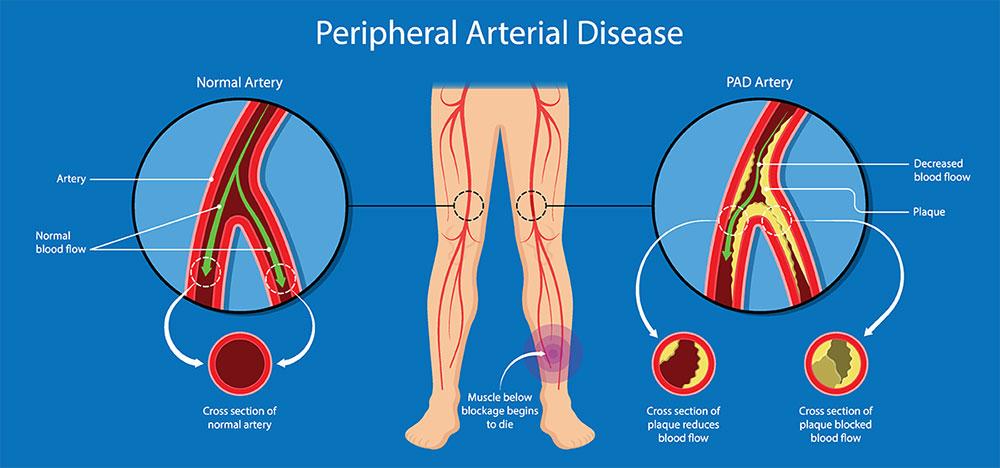
Peripheral artery disease, or PAD - Peripheral Artery Disease, is a vascular disease usually caused by narrowing or blockage of the arteries that supply blood to the limbs, especially the legs. The most common cause is atherosclerosis, meaning the buildup of fat, cholesterol, calcium, and vascular plaque in the artery walls.
When the leg arteries become narrowed, not enough blood and oxygen reach the muscles and tissues of the legs. As a result, the patient may develop pain, cramping, heaviness, or leg fatigue while walking. In more advanced cases, pain may occur even at rest, and the risk of ulcers, infection, and severe tissue damage increases.
The important point is that peripheral artery disease is not limited to the legs. Blockage in the leg arteries can be a sign of vascular disease in other parts of the body, including the heart and brain. For this reason, timely diagnosis of PAD is very important for preventing cardiac and cerebrovascular complications.
Why is the ABI test important?
The importance of the ABI test lies in its ability to detect peripheral artery disease in early stages, even when the patient does not yet have obvious symptoms. Early diagnosis allows the physician to prevent disease progression through appropriate treatment, lifestyle modification, risk factor control, and, when needed, more specialized interventions.
The most important reasons the ABI test matters
1. Early diagnosis of blocked leg arteries
Many patients have no specific symptoms in the early stages of peripheral artery disease. ABI can identify reduced blood flow before serious complications occur.
2. Prevention of foot ulcers and infection
In diabetic patients or people with poor circulation, reduced blood flow can lead to slow-healing wounds and infection. ABI plays an important role in assessing the risk of these problems.
3. Reducing the risk of amputation in high-risk patients
Delayed diagnosis of severe leg artery blockage can increase the risk of tissue damage and even amputation. Timely ABI testing helps with faster and more accurate decision-making.
4. Assessing the risk of heart and brain diseases
Peripheral artery disease is often associated with a higher risk of heart attack and stroke. Therefore, ABI can be considered an important marker for evaluating overall vascular health.
5. Helping choose the best treatment approach
The ABI value helps the physician estimate disease severity and decide whether the patient needs medication, lifestyle modification, further testing, or vascular intervention.

What conditions can the ABI test detect?
The ABI test plays a direct and indirect role in diagnosing and evaluating many vascular problems.
1. Peripheral artery disease of the legs
The most important use of ABI is diagnosing peripheral artery disease. In this condition, the leg arteries become narrowed or blocked because of fatty plaque and vascular deposits.
2. Narrowing or blockage of lower-limb arteries
If not enough blood reaches the legs, ABI can show reduced pressure at the ankle and raise the possibility of narrowing or blockage in the leg arteries.
3. Vascular complications of diabetes
Diabetic patients are more vulnerable than others to vascular and nerve damage in the feet. Reduced blood flow in these patients can cause diabetic foot ulcers, infection, and delayed wound healing. The ABI test is an important tool for assessing foot artery health in diabetic patients.
4. Vascular complications of high blood pressure
Over time, high blood pressure damages vessel walls, causes arterial stiffness, and increases the likelihood of arterial narrowing. ABI helps evaluate peripheral arteries in these patients.
5. Complications caused by smoking
Smoking is one of the most important risk factors for blocked leg arteries. Smokers, especially at older ages, are at greater risk for peripheral artery disease. ABI can help identify vascular problems early in these individuals.
6. Atherosclerosis
Atherosclerosis can involve the arteries of the heart, brain, kidneys, and legs. ABI is a simple and useful method for evaluating possible atherosclerosis in the arteries of the lower limbs.
7. Assessment of reduced blood flow severity
ABI does not only show whether disease is present; it can also help estimate disease severity. The lower the ABI value, the higher the likelihood of more severe reduction in blood flow.

What are the uses of the ABI test?
The ABI test is not just a simple number; it is a valuable tool for diagnosis, prevention, treatment, and follow-up of vascular disease.
Diagnostic uses of the ABI test
Diagnosis of peripheral artery disease
Evaluation of the cause of leg pain while walking
Differentiating vascular pain from nerve, muscle, and skeletal pain
Evaluating coldness, numbness, tingling, or color change in the feet
Assessing weak pulses or reduced leg blood flow
Assessing vascular status in diabetic and high-risk patients
Preventive uses of the ABI test
Identifying people at risk of cardiovascular disease
Preventing progression of leg artery blockage
Reducing the risk of chronic foot wounds
Helping prevent serious complications such as infection and tissue damage
Assessing overall vascular system health
Treatment-related uses of the ABI test
Determining the severity of peripheral artery disease
Helping choose the appropriate treatment method
Assessing the need for further tests or imaging
Monitoring the patient's response to medication
Evaluating the result of treatment or vascular interventions
Deciding whether referral for advanced evaluation is needed
Who should have an ABI test?
ABI testing is especially important for certain people because their risk of leg artery blockage or peripheral artery disease is higher.
The ABI test is particularly recommended for:
Patients with diabetes
People with high blood pressure
People with high cholesterol
Smokers or people with a long smoking history
People over 50 with cardiovascular risk factors
People over 65, even without clear symptoms
Patients with a history of heart attack
Patients with a history of stroke
People with a history of angioplasty, cardiac stent placement, or cardiac surgery
Patients with a history of peripheral artery disease
People with leg pain while walking
People whose leg pain improves with rest
Patients with coldness or numbness in the feet
People with slow-healing wounds on the feet or toes
Patients with skin color changes in the feet or toes
People whose foot pulse is weak or unclear on examination
Patients with a family history of cardiovascular disease
Symptoms that may indicate the need for ABI testing
Although the final diagnosis must be made by a physician, some symptoms can suggest reduced blood flow to the legs.
Important symptoms of reduced leg blood flow
Calf pain while walking
Leg muscle cramps with activity
Leg pain that improves with rest
Leg fatigue or heaviness when walking
Cold feet, especially one foot compared with the other
Tingling, pins-and-needles sensation, or numbness in the feet
Paleness, bluish discoloration, or darkening of the toes
Delayed healing of foot wounds
Foot pain at rest, especially at night
Reduced hair growth on the legs or feet
Thin, shiny skin on the feet
Reduced or absent pulse in the foot
One classic symptom of peripheral artery disease is intermittent claudication, or Claudication. In this condition, the patient develops calf pain or cramping after walking a certain distance, and the pain decreases with stopping and resting.
How is the ABI test performed?
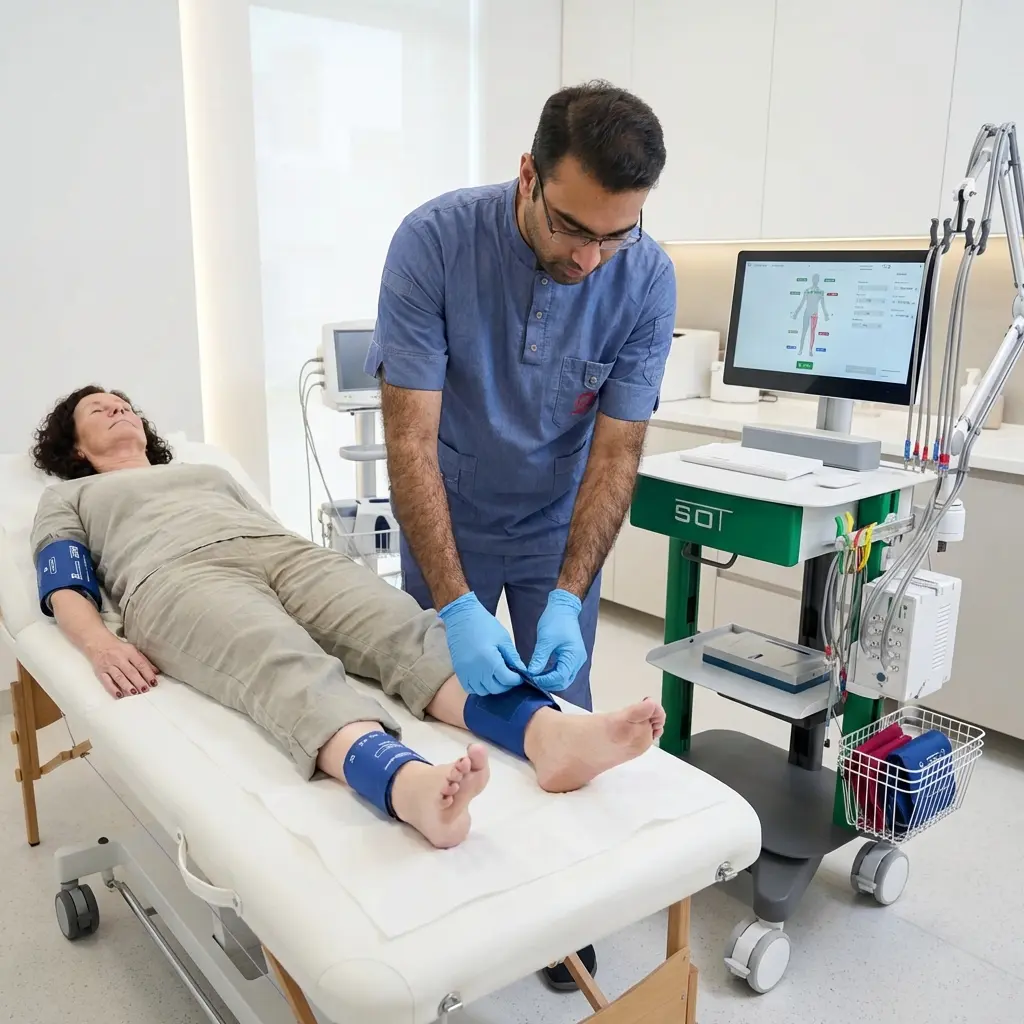
The ABI test at Delban Advanced Cardiovascular Clinic in Mashhad is performed noninvasively and painlessly. It usually takes about 15 to 20 minutes and does not require injection, anesthesia, local anesthetic, or contrast material.
Steps of the ABI test
1. Patient rest before starting the test
The patient lies down for a few minutes so blood pressure can be measured under calm and stable conditions.
2. Measuring arm blood pressure
Systolic blood pressure in the arms is measured using a blood pressure cuff and, in some cases, with a vascular Doppler device.
3. Measuring ankle blood pressure
Blood pressure is then measured at the ankle and in the leg arteries. The main arteries of the foot, such as the dorsalis pedis artery and posterior tibial artery, are usually assessed.
4. Calculating the ABI
The ABI value is obtained by dividing ankle systolic blood pressure by arm systolic blood pressure.
5. Physician interpretation of the result
The resulting number must be interpreted together with the patient's symptoms, examination, medical history, medications, and cardiovascular risk factors.
Is the ABI test painful?
No. The ABI test is usually not painful. The experience is similar to having blood pressure measured. You may feel slight pressure or tightness when the blood pressure cuff inflates on the arm or ankle, but this is brief and tolerable.
This test does not require injections, blood sampling, anesthesia, local anesthetic, or hospitalization.
Preparation before the ABI test
The ABI test does not require complicated preparation, but following a few simple points can help improve result accuracy.
Important points before the ABI test
1. Avoid smoking before the test
It is best to avoid smoking for at least several hours before the test, because nicotine can cause blood vessel constriction and alter the result.
2. Avoid caffeine before the test
Coffee, strong tea, energy drinks, and other caffeinated substances may affect blood pressure. It is best to limit them before the test according to the clinic's recommendations.
3. Wear comfortable clothing
Access to the arms and ankles is needed for the test. It is best to wear loose, comfortable clothing and avoid very tight socks or pants.
4. Do not stop your medications without physician advice
If you take blood pressure medication, diabetes medication, heart medication, blood thinners, or any other medication, do not stop it without your physician's instruction. If needed, the physician or clinic staff will provide guidance.
5. Avoid strenuous activity before the test
Heavy physical activity before the test may affect blood pressure and measurement results. It is best to rest quietly for a few minutes before the test.
6. Bring your medical history
If you have a history of diabetes, high blood pressure, high cholesterol, heart disease, stroke, vascular surgery, angioplasty, or foot wounds, it is best to bring previous records and test or imaging results.
Interpreting ABI test results
The ABI result is reported as a number. This number shows the status of blood flow in the legs. However, precise interpretation must always be performed by a specialist physician based on the patient's condition.
ABI value interpretation table
| ABI value | Possible interpretation |
|---|---|
| 1.00 to 1.30 | Normal |
| 0.90 to 1.00 | Borderline or suspicious |
| 0.70 to 0.90 | Mild peripheral artery disease |
| 0.40 to 0.70 | Moderate peripheral artery disease |
| Less than 0.40 | Severe disease and significant reduction in blood flow |
| Above 1.30 | Possible severe arterial stiffness or calcification |
What does a normal ABI mean?
If the ABI value is in the normal range, it usually indicates that blood flow to the legs is appropriate based on the measured pressure. However, in some patients, especially people with diabetes or kidney disease, leg arteries may become stiff because of calcium deposits, and ABI alone may not be sufficient. In these situations, the physician may request further evaluations.
What does a low ABI mean?
A low ABI usually indicates reduced blood flow in the legs. The lower the ABI value, the greater the likelihood of more severe narrowing or blockage of the leg arteries.
Possible consequences of a low ABI
Presence of peripheral artery disease
Narrowing or blockage of the leg arteries
Reduced blood flow to leg muscles
Increased likelihood of leg pain when walking
Higher risk of slow-healing wounds
Higher chance of complications in diabetic patients
Need for more specialized evaluation and treatment
What does an ABI above 1.3 mean?
Sometimes the ABI value is reported above the normal range. This does not necessarily mean excellent blood flow. In some patients, especially those with diabetes, kidney disease, and older adults, the vessel walls may become stiff and calcified. In this situation, the arteries do not compress well and the ABI value may be falsely high.
In such cases, the physician may recommend further tests such as toe-brachial index, vascular Doppler, or other specialized evaluations.
What important information does the ABI test give the physician?
The ABI test provides very valuable information about the leg arteries and the patient's cardiovascular risks.
Information ABI provides to the physician
Is blood flow to the legs normal or reduced?
Is peripheral artery disease likely?
What is the possible severity of leg artery blockage?
Could the patient's leg pain have a vascular origin?
Does the patient need further evaluations?
Is medication or vascular intervention needed?
Is there a risk of ulcers, infection, or tissue damage in the foot?
Has the patient's treatment been effective?
The role of ABI testing in diabetic patients
Diabetic patients are one of the most important groups who should be evaluated for foot artery health. Diabetes can damage both the nerves and the blood vessels of the feet. The combination of nerve dysfunction and reduced blood flow can create the conditions for diabetic foot ulcers.
In diabetic patients, small foot wounds may occur easily and heal slowly because of poor blood flow. ABI helps the physician assess foot circulation and reduce the risk of ulcers, infection, and more severe complications.
However, in some diabetic patients, because of arterial stiffness and calcification, ABI alone may not be sufficient and the physician may recommend further testing.
The role of ABI testing in smokers
Smoking is one of the strongest risk factors for peripheral artery disease. Nicotine and chemicals in cigarettes damage vessel walls, increase inflammation, narrow blood vessels, and accelerate atherosclerosis.
Smokers may develop leg artery blockage at younger ages than others. Therefore, ABI testing in smokers is very important, especially if leg pain, cold feet, reduced pulse, or a history of heart disease is present.
The role of ABI testing in cardiac patients
People with a history of coronary artery disease, heart attack, stent placement, angioplasty, or cardiac surgery may also have atherosclerosis in other arteries of the body. Leg artery blockage in these patients can be a sign of widespread vascular disease.
ABI testing in cardiac patients helps provide a more comprehensive assessment of vascular status and can play a role in treatment planning and reducing future complication risk.
The role of ABI testing in people with high blood pressure and high cholesterol
High blood pressure and high cholesterol are major causes of vascular damage. Over time, these two factors cause arteries to harden, narrow, and become blocked. ABI testing in people who have lived for years with high blood pressure or high cholesterol can help detect leg artery involvement early.
Is the ABI test useful for varicose veins?
Varicose veins are usually related to the venous system of the legs, while the ABI test is mainly used to evaluate arteries and arterial blood flow in the legs. However, in patients with leg symptoms, the physician may request ABI or other vascular assessments to differentiate arterial problems from venous problems.
Therefore, ABI is not the main test for diagnosing varicose veins, but it can be helpful in the overall evaluation of leg vascular problems.
When are further evaluations needed after an ABI test?
In some cases, the ABI result or the patient's symptoms may show that more evaluation is needed.
Situations that may require further evaluation:
ABI lower than normal
Severe leg pain while walking
Leg pain at rest
Slow-healing wound on the foot or toes
Severe coldness or color change in the foot
ABI above 1.3 with possible arterial stiffness
Significant difference between the two legs
Diabetes with suspicious symptoms
History of heart disease or stroke along with leg symptoms
Based on the patient's condition, the physician may recommend tests such as leg artery Doppler, vascular ultrasound, CT angiography, MR angiography, or other specialized evaluations.

Advantages of ABI testing at Delban Advanced Cardiovascular Clinic in Mashhad
ABI testing is more valuable when it is performed in a specialized setting, with accurate devices, and with clinical interpretation by a specialist physician.
Advantages of ABI testing at Delban Clinic
Testing in a specialized cardiovascular environment
Evaluation under the supervision of Dr. Seyed Mohsen Jahromi-Moghadam
Use of accurate, standard devices
Simultaneous review of symptoms and risk factors
Scientific and precise interpretation of the test result
Treatment or preventive recommendations tailored to the patient's condition
Ability to monitor treatment progress and reassess when needed
Suitable for diabetic, cardiac, vascular, and high-risk patients
Why is early diagnosis of leg artery disease important?
If peripheral artery disease is not diagnosed in time, it may gradually progress. In early stages, the patient may only develop leg pain or fatigue while walking, but in advanced stages, reduced blood flow can cause rest pain, ulcers, infection, and tissue damage.
Early diagnosis with ABI testing can prevent many complications.
Timely ABI diagnosis can help with:
Preventing progression of leg artery blockage
Reducing pain and mobility limitations
Preventing slow-healing wounds
Reducing the risk of foot infection
Reducing the likelihood of amputation in high-risk patients
Better control of cardiovascular risk factors
Reducing the risk of cardiac and cerebrovascular events
Choosing the right treatment at the right time
Is the ABI result alone enough for diagnosis?
The ABI test is a very important and reliable tool, but its result must be interpreted together with the medical history, physical examination, patient symptoms, disease history, and other clinical findings.
In some patients, especially people with diabetes, kidney disease, and calcified arteries, additional evaluations may be needed. Therefore, final ABI interpretation should be performed by a specialist physician.
What factors increase the risk of peripheral artery disease?
Knowing the risk factors helps with prevention and early diagnosis.
The most important risk factors include:
Diabetes
High blood pressure
High cholesterol
Smoking
Older age
Obesity and excess weight
Physical inactivity
Family history of cardiovascular disease
History of heart attack or stroke
Chronic kidney disease
Unhealthy diet
Poor blood sugar or blood pressure control
What happens after the ABI test?
After the test, the result is reviewed by the physician. If the ABI is normal, recommendations may be provided to maintain vascular health, control risk factors, and follow up periodically. If the ABI is low or abnormal, the physician makes decisions based on the severity of the problem, the patient's symptoms, and overall condition.
Possible steps after an abnormal ABI
Lifestyle modification
Smoking cessation
Strict blood sugar control
Blood pressure control
Cholesterol control
Recommendation for a therapeutic walking program
Medication when needed
Ordering further vascular tests
Referral for vascular interventions in severe cases
Does the ABI test need to be repeated?
In some patients, yes. ABI testing may be repeated to monitor disease progression or evaluate treatment effectiveness. Patients with peripheral artery disease, diabetes, a history of foot ulcers, or those receiving medication or vascular treatment may need periodic ABI testing as recommended by the physician.
Frequently asked questions about the ABI test
How long does the ABI test take?
ABI testing usually takes about 15 to 20 minutes. Depending on the patient's condition and the need for a more detailed assessment, it may take a little longer.
Does the ABI test require fasting?
Fasting is usually not required, but it is better to avoid smoking, caffeine, and strenuous activity before the test unless your physician advises otherwise.
Is the ABI test suitable for diabetic patients?
Yes. ABI testing is very important in diabetic patients because they are at risk for vascular damage and diabetic foot ulcers. However, in some diabetic patients with stiff or calcified arteries, additional tests may also be needed.
Does ABI show blockage in the heart arteries?
ABI does not directly examine the heart arteries, but an abnormal ABI may indicate vascular disease in the body and increased risk of cardiac and cerebrovascular problems.
Is the ABI test useful for leg pain?
Yes. If leg pain occurs while walking and improves with rest, ABI can help identify a vascular origin for the pain.
Is a high ABI dangerous?
An ABI above 1.3 may indicate arterial stiffness and calcification, especially in diabetic patients, kidney disease patients, and older adults. This should be evaluated by a physician.
Does the ABI test replace leg artery Doppler?
No. ABI is a very useful screening and diagnostic test, but in some cases the physician requests vascular Doppler or further imaging to evaluate blood flow and the location of arterial narrowing more precisely.
Summary
The ABI test, or Ankle-Brachial Index, is one of the most important simple, quick, noninvasive, and reliable methods for evaluating blood flow to the legs and diagnosing peripheral artery disease. By comparing ankle and arm blood pressure, this test provides the physician with valuable information about the possibility of narrowing or blockage of the leg arteries.
ABI testing is especially important for diabetic patients, smokers, people with high blood pressure or high cholesterol, those with a history of heart disease or stroke, people over 50, and patients with leg pain, coldness, tingling, or slow-healing foot wounds.
Timely diagnosis of reduced leg blood flow can prevent serious complications such as chronic wounds, infection, tissue damage, amputation, and cardiac and cerebrovascular risks.
At Delban Advanced Cardiovascular Clinic in Mashhad, ABI testing is performed under the supervision of Dr. Seyed Mohsen Jahromi-Moghadam using standard equipment, and the result is interpreted professionally based on each patient's condition.
Book an ABI test at Delban Clinic in Mashhad
To have an ABI test and specialized assessment of the lower-limb arteries, you can book through the Delban Clinic appointment system.
Delban Advanced Cardiovascular Clinic - Mashhad
Under the supervision of Dr. Seyed Mohsen Jahromi-Moghadam
Appointment phone: 05132042 - 09003204200