


Hi there! How can we help you today?
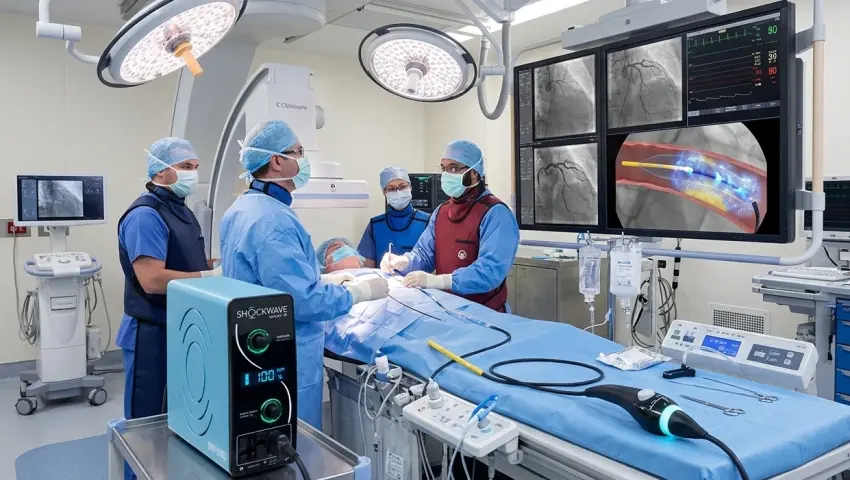
Intravascular Lithotripsy (IVL)
An advanced solution for treating calcified coronary artery stenoses
What is an intravascular lithotripsy (IVL) device?
Advanced treatment of coronary artery stenosis with modern technology
Coronary artery stenosis is one of the most common heart diseases and can cause chest pain, shortness of breath, and even heart attack. In many patients, hard calcium deposits form within the vessel walls, making it difficult to open the artery with standard angioplasty methods.
One of the most advanced treatment technologies for this problem is the intravascular lithotripsy device, or Intravascular Lithotripsy (IVL). This technology works similarly to a kidney stone lithotripsy device, but it is designed specifically to break calcium deposits inside the coronary arteries.
This advanced method is currently performed by Dr. Seyed Mohsen Jahromi-Moghadam in Mashhad at the best specialized cardiovascular centers and hospitals.
What is an IVL device?
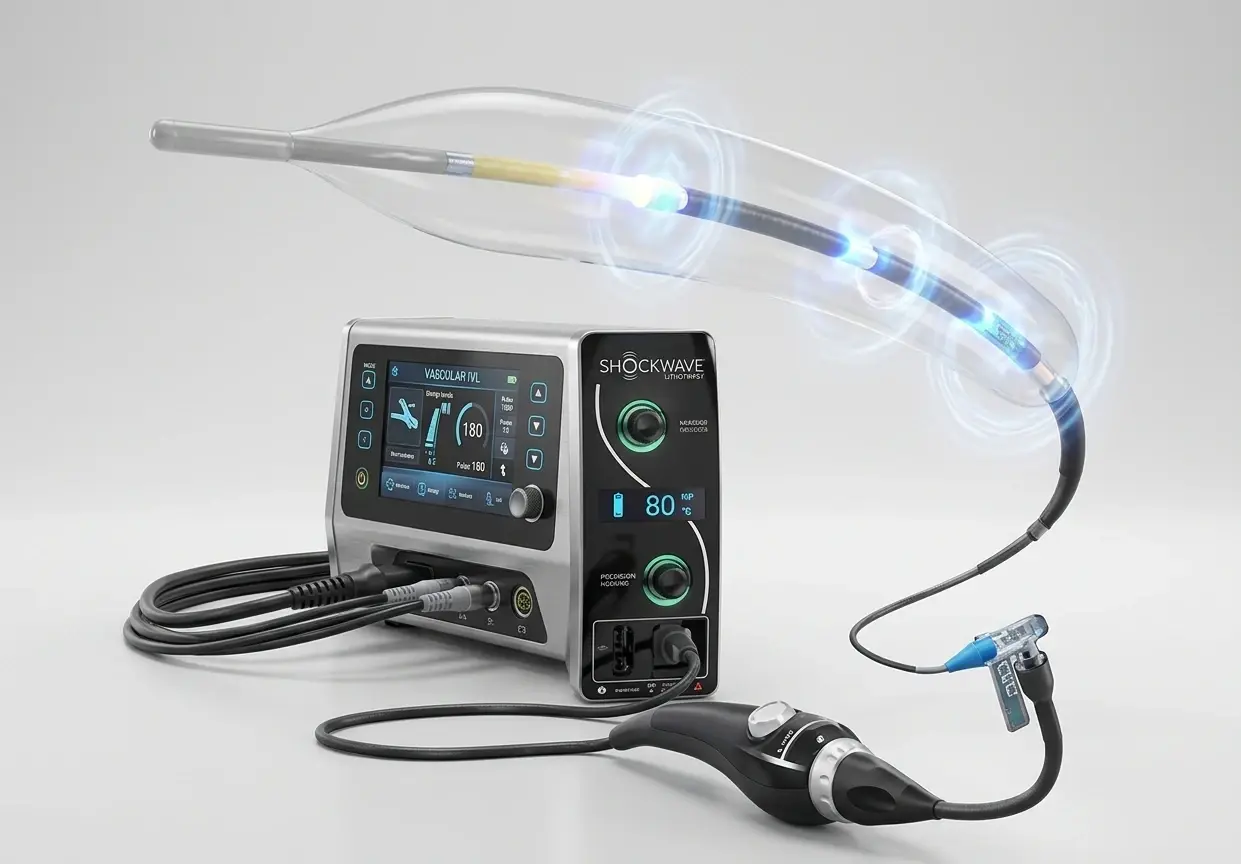
IVL, or Intravascular Lithotripsy, is an advanced technology for treating severe calcified arterial stenosis. It uses acoustic shockwaves to fracture hard calcium deposits within the vessel wall.
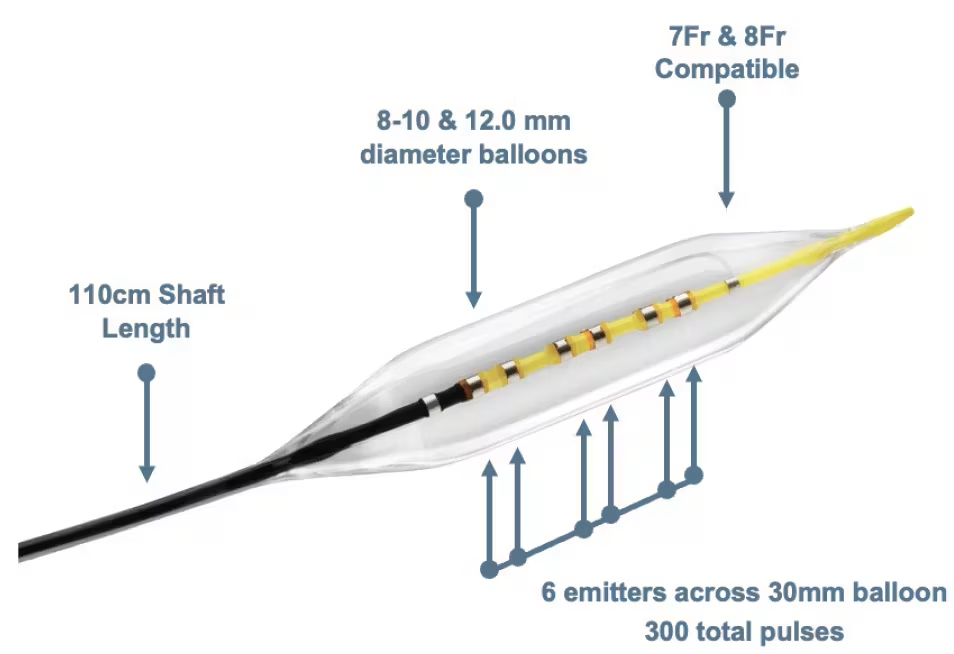
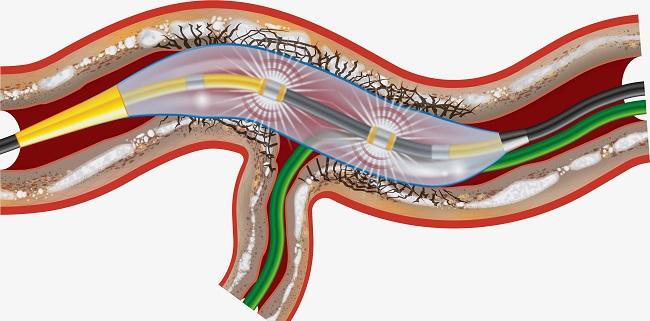
The device includes a special balloon equipped with acoustic wave emitters, which is positioned inside the artery. After the device is activated, the acoustic waves break the hard calcium within the vessel wall without damaging the surrounding soft tissue.
After the calcium is fractured, the artery becomes more flexible and full vessel expansion with a balloon or stent becomes possible.
Uses of the intravascular lithotripsy device
IVL is used to treat the following:
Severe coronary artery stenosis
Calcified lesions
Patients in whom the stent is difficult to expand inside the artery
Patients in whom standard angioplasty has limited success
Peripheral arterial stenosis, such as leg arteries
Vessel preparation before stent placement
This technology increases the success of angioplasty in arteries that were previously very difficult to treat.
How does an IVL device work?
The mechanism of IVL is very interesting and scientific.
Procedure steps:
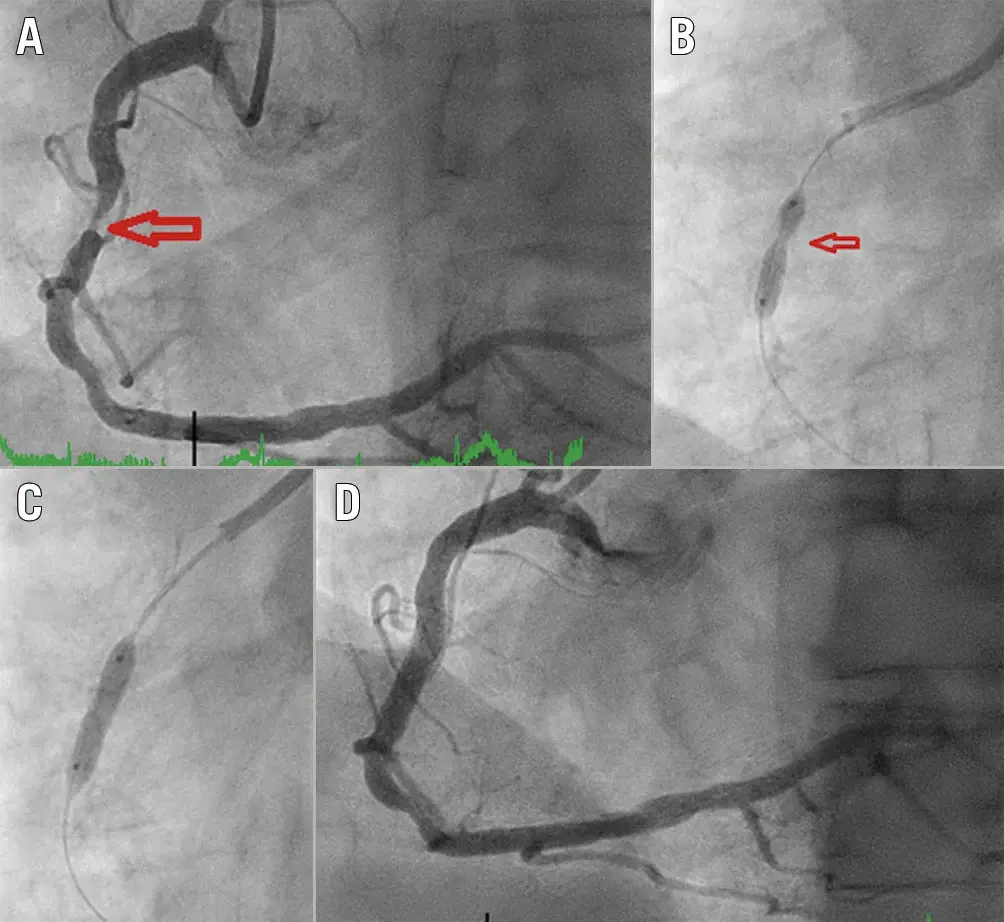
First, the physician enters the artery using the angiography technique.
A special IVL balloon is guided to the site of stenosis.
The balloon is inflated at low pressure.
The device generates short, high-energy acoustic waves.
These waves cause tiny fractures in the calcium deposits inside the vessel wall.
After the calcium is fractured, the vessel becomes expandable.
Finally, a stent is placed in the artery.
An important advantage of this method is that the calcium inside the vessel wall is fractured, not merely compressed.
Importance of using IVL
In many patients, arterial narrowing is caused by severe calcification. In this situation:
A standard balloon cannot open the artery
The stent does not expand well
The risk of complications increases
Using IVL helps:
The stent expand better
The treatment result last longer
The chance of recurrent stenosis decrease
The risk of vessel rupture decrease
For this reason, IVL is considered one of the most important therapeutic advances in complex angioplasty.
In which arteries is IVL used?
This technology can be used in several types of vessels:
Coronary arteries
Its most important use is in calcified coronary arteries.
Peripheral arteries
In conditions such as:
Leg artery stenosis
Peripheral artery disease (PAD)
Large vessels
In some cases, it is also used before advanced treatments such as TAVI.
Which patients are good candidates for IVL?
IVL is not used for all patients and is mainly used in the following cases:
Patients with severe calcified coronary artery stenosis
Older patients with extensive calcium deposits
Patients in whom previous angioplasty was unsuccessful
Patients in whom the stent is difficult to expand
Patients with complex vascular lesions
Determining whether a patient needs IVL is done by a cardiologist and angioplasty specialist based on angiography.
Benefits of using the vascular lithotripsy device
The benefits of this method include:
High safety
Less injury to the vessel wall
Increased angioplasty success
Better stent expansion
Reduced chance of recurrent stenosis
Suitable for severely calcified lesions
How is the IVL procedure performed?
This procedure is performed in the angiography suite, and its steps are similar to angioplasty:
Performing angiography
Inserting a catheter through the arm or leg artery
Guiding the IVL balloon to the stenosis site
Activating the lithotripsy waves
Fracturing calcium in the vessel wall
Opening the artery with a balloon
Placing the stent
The entire process usually takes less than one hour.
Is IVL dangerous?
IVL is considered safer than many older methods. The chance of serious complications is very low, but like any interventional procedure, rare complications may occur, such as:
Bleeding
Vessel injury
Temporary arrhythmia
These issues are controlled with careful cardiology supervision.
IVL in Mashhad
In Mashhad, this advanced method is performed by Dr. Seyed Mohsen Jahromi-Moghadam, cardiologist and angioplasty subspecialist.
This treatment is performed in the best hospitals and specialized heart centers in Mashhad using modern equipment and international standards.
The purpose of using this technology is to provide safe, precise, and advanced treatment for patients with severe coronary artery stenosis.
Frequently asked questions about IVL
Is IVL the same as angioplasty?
No. IVL is an adjunctive technology in angioplasty that is used to fracture hard calcium in the artery.
Is this procedure painful?
No. This procedure is performed under local anesthesia, and the patient usually does not feel significant pain.
Is a stent needed after IVL?
In most cases, yes. After the calcium is fractured, a stent is usually placed to keep the artery open.
How long is hospitalization required?
Most patients stay in the hospital for one day.
Is this method suitable for all patients?
No. Only patients with calcified stenosis are candidates for this method.
Summary
Intravascular lithotripsy (IVL) is one of the newest and most advanced methods for treating severe calcified coronary artery stenosis. This technology uses acoustic waves to fracture hard deposits inside the artery and enables successful angioplasty and stent placement.
This method is currently performed in Mashhad by Dr. Seyed Mohsen Jahromi-Moghadam in specialized cardiovascular centers with advanced equipment.
If you have severe coronary artery stenosis or cardiac-type pain, consultation with a cardiologist can determine the best treatment method for you.
For consultation and specialized evaluation:
Dr. Seyed Mohsen Jahromi-Moghadam
Cardiologist
Angioplasty and IVL in Mashhad
In the most equipped and best hospitals in Mashhad
For more information or to book an appointment, please contact us.
05132042 - 09003204200